
Warehouse sorting robots: mobile fleets, fixed sorters, robotic arms, how to choose
October 8, 2026 · 8 min read
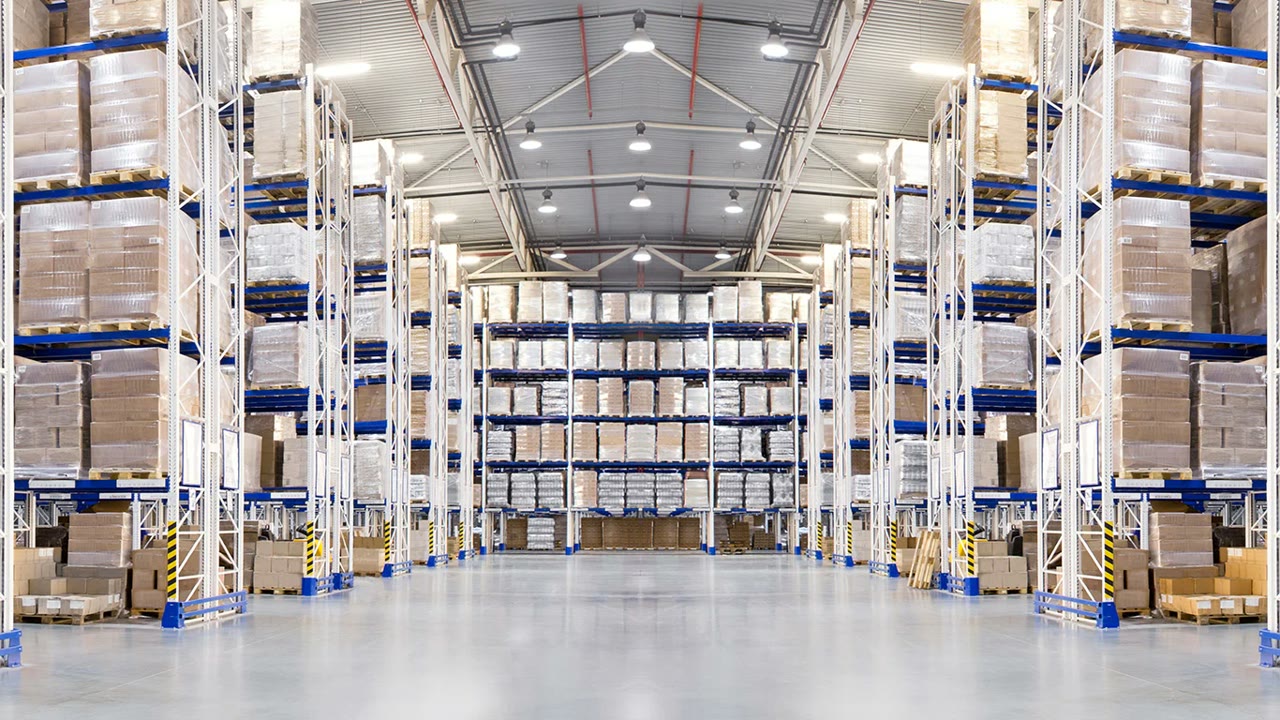
A sorting robot distributes parcels or items to destinations (orders, routes, carriers) with no operator carrying them. There are three families: fleets of small mobile robots running on a table or mezzanine, fixed sorters (cross-belt, shoe, tilt-tray) and robotic arms that feed those sorters. Quoted throughputs range from a few hundred to over 50,000 items per hour; none of these machines moves a pallet.
What a sorting robot is for
Sorting happens wherever a flow arrives in bulk and must leave by destination: e-commerce order picking, parcel hubs, returns, store allocation. In a warehouse it sits between two pallet stages: upstream, received pallets are broken down; downstream, sorted parcels are grouped, often re-palletised, before loading. Beumer explicitly links sorting to receiving, picking and palletising (Beumer, tilt-tray sorters).
A sorting robot takes its orders from the warehouse control system, the WMS, which knows the destination of each scanned item. It differs from a simple conveyor by its ability to distribute to dozens or thousands of outlets.
Fleets of mobile sorting robots
This is the newest image of the sorting robot: hundreds of small robots that each carry one item and drop it into a chute or tote. Tompkins Robotics quotes over 50,000 items per hour to more than 6,000 destinations for its tSort system, with robots carrying 2.3 to 30 kg, mounted on modular tables that can be added or moved (Tompkins Robotics). Geek+ offers sorting robots carrying 8 to 100 kg and a system quoted at up to 15,000 items per hour (Geek+, S series; Geek+, MiniSort).
Customer cases give more concrete figures than brochures. At Nissa, 12 Geek+ robots sort over 500 pieces per hour to 22 outlets on 199 m². At THG, 430 Libiao robots sort 11,151 items per hour to 3,840 destinations (THG Ingenuity case study). The strength of these fleets is modularity: throughput rises with the number of robots, and the installation can be moved. Their limit is format: an item too big or too heavy for the robot leaves the system.
Fixed sorters: cross-belt, shoe, tilt-tray
Fixed sorters are mechanical loops or lines. The cross-belt sorter carries each parcel on a small transverse belt that ejects it at the right outlet: Vanderlande quotes up to 18,000 carriers per hour at 3 m/s for its CROSSORTER (Vanderlande), Beumer parcels from 100 g to 50 kg (Beumer, BG Sorter ET), Interroll 50 kg (Interroll) and Fives 80 kg for its GENI-Belt.
The shoe sorter pushes cartons and totes sideways with shoes sliding along slats: Interroll quotes 3,000 to 8,000 items per hour for a modular sorter (Interroll, Sortteq MC-S), Vanderlande over 10,000 cartons per hour (Vanderlande, POSISORTER). The tilt-tray sorter tips a tray to slide the item off, and handles parcels, bags and heavy cases. These installations deliver high, steady throughput, at the cost of a fixed footprint and layout.
Robotic induction arms
The hardest job on a sorter is often induction: taking parcels from a pile and placing them one by one on the sorter. Vision-guided robotic arms do this work. Plus One Robotics quotes 2,200 to 2,300 picks per hour sustained and 3,300 at peak, with an exception lane for items the arm cannot grip (Plus One Robotics, MODEX 2024). The arm does not replace the sorter: it feeds it.
How to choose: the grid by family
The figures below are quoted by manufacturers or taken from published customer cases; they position the families, they do not size a project.
| Family | Quoted throughput | Quoted max. load | Strength | Limit |
|---|---|---|---|---|
| Fleet of mobile robots | 500 items/h (12 robots, Nissa case) to over 50,000/h (Tompkins) | 2.3 to 30 kg (Tompkins), 8 to 100 kg (Geek+) | Modular, relocatable | Throughput tied to robot count |
| Cross-belt sorter | Up to 18,000 carriers/h (Vanderlande) | 50 kg (Beumer, Interroll), 80 kg (Fives) | Wide range of formats | Fixed installation |
| Shoe / chain sorter | 3,000 to 8,000 items/h (Interroll), over 10,000 cartons/h (Vanderlande) | Not published | Cartons and totes at high rate | Fixed, linear |
| Tilt-tray sorter | Not published | Parcels, bags, heavy cases (Beumer) | Varied loads | No public throughput |
| Robotic induction arm | 2,200 to 2,300 picks/h sustained (Plus One) | Not published | Replaces manual induction | Exception lane needed |
Three questions guide the choice. What is the item profile: weight, dimensions, soft or irregular packaging? What peak throughput, and how much does it vary over the year? Must the installation be able to grow or move? A mobile fleet suits a growing e-commerce business; a fixed sorter suits a parcel hub with massive, stable flows. None of the manufacturers consulted publishes prices: compare offers on guaranteed throughput and error rate.
Questions to ask before a sorting project
A brochure gives a maximum throughput; your operation lives with peak throughput, atypical items and breakdowns. Before comparing offers, put six points in writing. The throughput to sustain at peak, not on average, with the year’s seasonality. The guaranteed sorting error rate and how it is measured. Exception handling: where rejected items go, and who deals with them. WMS integration: who supplies the interface, and who maintains it. The maintenance plan and response time, because a stopped sorter blocks all dispatch. And scalability: can outlets, robots or a second loop be added without starting over?
Also ask to visit a live site handling items similar to yours. Published customer cases show throughputs well below the quoted maximums, which is normal: they reflect a real mix of items, destinations and breaks. That is the figure that belongs in your profitability calculation.
And what about pallets?
The largest sorting robots found carry 100 kg for 750 × 1,000 × 600 mm; a loaded pallet is far beyond these limits. Sorting therefore never handles pallets: it starts when they are broken down and stops when they are rebuilt. Between the dock and the sorting area, and between palletising and dispatch, there are still pallet runs that neither the sorter nor its robots perform. That is the domain of pallet trucks, manned or autonomous, covered in our overview of logistics robot types.
FAQ
What is the difference between a sorting robot and a cross-belt sorter?
A cross-belt sorter is a fixed loop of carriers, quoted at up to 18,000 carriers per hour by Vanderlande. Robotic sorting relies on a fleet of small mobile robots running on a table or mezzanine: throughput is increased by adding robots, and the installation can be moved.
How much weight can a sorting robot carry?
According to manufacturers, 2.3 to 30 kg at Tompkins Robotics and 8 to 100 kg at Geek+. Fixed sorters accept up to 50 kg at Beumer and Interroll, 80 kg at Fives. None takes a full pallet.
How much space does robotic sorting need?
It depends on the number of outlets and the throughput. A case published by Geek+ uses 199 m² for 12 robots and 22 outlets. Mobile fleet manufacturers highlight space savings compared with fixed sorters, to be checked on your layout.
Can sorting robots handle irregular parcels?
Partly. Cross-belt sorters accept a wide range of formats, and induction arms divert items they cannot grip to an exception lane. Items too big, too heavy or too soft for the machine must be handled separately.
Can a sorting robot move pallets?
No. The maximum loads found range from 2.3 to 100 kg. Sorting happens after pallets are broken down and before they are rebuilt; moving pallets between docks, sorting and dispatch is the job of pallet trucks, manned or autonomous.
Related reading
- Logistics robots: the 7 types of warehouse robots, to place sorting among the others.
- Goods-to-person: when the tote comes to the picker.
- Picking methods, upstream of sorting.
- Stacker cranes: the automated storage that often feeds sorting.
- Distribution centres: automating pallet flows around sorting.
Are your sorting robots fed and emptied with pallets moved by hand? The Easy to Carry autonomous pallet truck runs between docks, sorting area and dispatch, in your current aisles. Discover the robot or have your aisles checked.
Let's assess your aisles before everyone else does
Distribution opens soon in France. In the meantime, four questions are enough: your regional contact sends back a written verdict on your site, with no price and no date.