
Goods-to-person: when the warehouse comes to the operator
August 18, 2026 · 8 min read
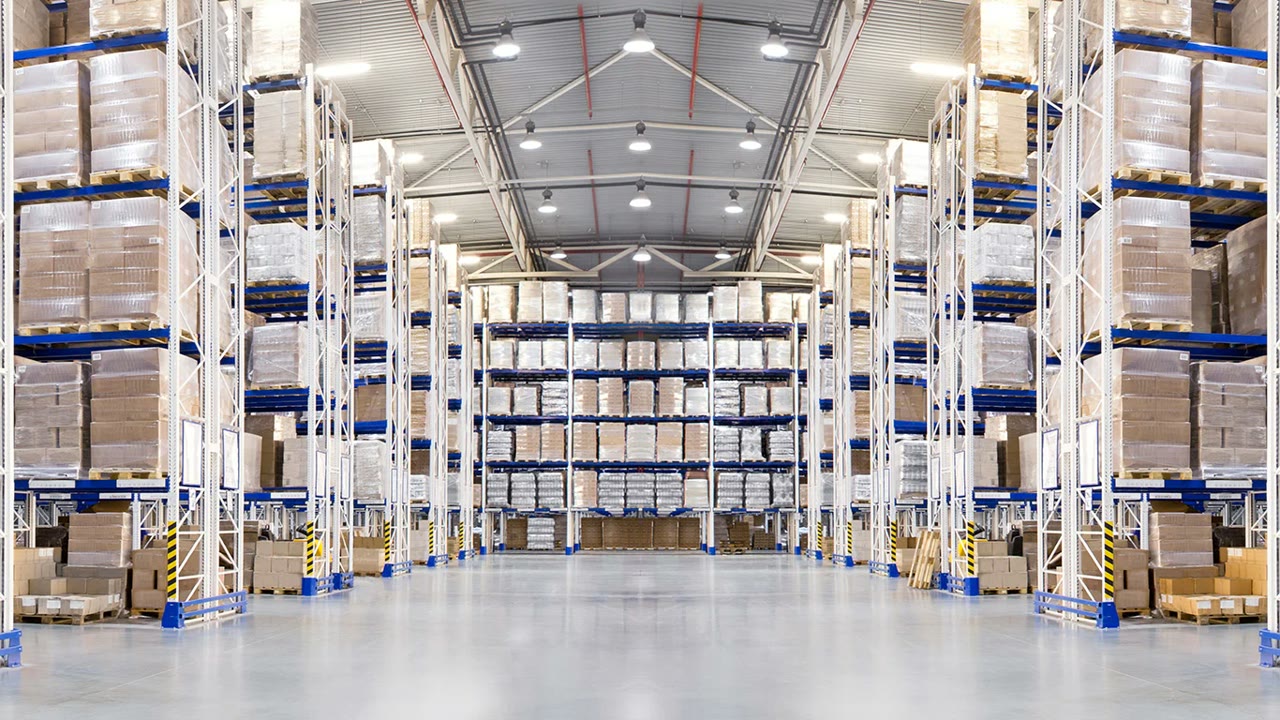
Goods-to-person is an order-picking principle in which the goods travel to the operator, via a shuttle, a mobile rack or an automated storage system, rather than the other way round. Popularised in France by systems such as Exotec Skypod (Cdiscount, Renault, E.Leclerc), it targets picking productivity but calls for heavy investment and a fixed infrastructure. The autonomous pallet truck robot, for its part, answers a different need: automating the full-pallet flow, with no construction work and no dedicated installation.
What is goods-to-person?
Goods-to-person (literally "the goods to the person") refers to an order-picking method in which an automated system brings the items to a fixed picking station. The operator stays put: they pick, check and validate, while the machine handles moving the stock (source: Easy to Carry data pool, picking domain).
This approach is the opposite of how warehouses traditionally operate, where the order picker walks the aisles on foot to reach each location. Goods-to-person reverses this logic: it is no longer the human who goes to the stock, it is the stock that comes to the human.
Goods-to-person vs person-to-goods: two approaches to order picking
Person-to-goods (also called man-to-goods) remains the most widespread method in French warehouses: the picker moves around, equipped with an RF scanner, a voice picking headset or a simple pick list, to fetch each item at its location. It is the traditional method, simple to implement and low on upfront investment.
Goods-to-person, conversely, keeps the operator at a picking station. Robotic shuttles, mobile racks or automated storage and retrieval systems (AS/RS) bring the bins or cartons containing the items to be picked to that station. Walking all but disappears from the workstation.
The choice between the two depends on order volume, the density of items (SKU) and the available budget. Order picking remains the number-one cost centre in a warehouse, estimated at around 50-55% of logistics operating costs (source: Hardis Supply Chain, Grett); it is this economic weight that justifies investing in goods-to-person systems at high volume.
How does a goods-to-person system work?
The technical principle varies by vendor, but the mechanics are comparable: shuttle robots move within a dense storage structure, generally a multi-level metal rack, and bring the requested bin or pallet up to a preparation station where the human operator carries out the pick.
The warehouse management system (WMS) or dedicated software orchestrates the priorities: it decides which bin to bring up, and in what order, to optimise the number of lines picked per hour. The picking station is ergonomic and fixed, which reduces fatigue linked to repeated movement.
This architecture requires a dedicated storage structure, often a building or a zone built or reorganised specifically to house the racks and robots. This is a major point of difference from a mobile robot that navigates the floor of an existing warehouse with no modification to the building.
Goods-to-person players and documented cases in France
France's goods-to-person champion is Exotec, with its Skypod system: robots climb within a storage structure to bring bins to the picking stations. A new generation, Skypod Next Generation, launched in February 2025 (source: Exotec, Faq-logistique).
Several documented cases illustrate this technology's rollout in France.
- Renault Group, Villeroy site: 191 Exotec Skypod robots combined with artificial intelligence run the spare-parts logistics; processing time was cut sixfold and the number of orders processed rose by 25% (source: CIO-online).
- Cdiscount, Bordeaux platform: a long-standing partnership with Exotec to automate e-commerce order picking (source: Exotec, Voxlog).
- E.Leclerc, Seclin warehouse: switching to an Exotec system delivered 70% faster order picking (source: Exotec, E.Leclerc Seclin case study).
Other global players are positioning themselves in this space, starting with Geek+, presented in the data pool as a world leader in AMRs but focused on goods-to-person (PopPick, P-series ranges), with pallets treated as a peripheral rather than central part of its offering.
The benefits of goods-to-person
The first expected benefit is picking productivity: by eliminating walking, an operator can pick more order lines per hour. The Renault Villeroy case (processing time cut sixfold) and E.Leclerc Seclin (70% faster picking) illustrate the scale of gain possible at high-volume sites (sources cited above).
The second benefit is storage density: goods-to-person structures often allow more items to be stored on the same floor area by making use of the building's height.
Finally, these systems reduce the physical strain associated with repeated movement and prolonged walking, a substantive issue as the logistics sector faces a labour shortage for picking and driving roles.
The limitations of goods-to-person: CAPEX and rigidity
Goods-to-person carries a high entry cost. The data pool does not document a public price per station, but the order of magnitude for heavy automation projects in mass retail runs into tens of millions of euros; that is the case for E.Leclerc platforms mechanised by Witron, where a single platform (Socara) reaches 40,000 m², of which 34,400 m² is automated (source: Strategies Logistique, LSA). This kind of investment requires enough order volume to pay it back.
The second limitation is the system's rigidity. A goods-to-person structure is designed for a given building, rack height and flow. A layout change, a move, or a major shift in the product catalogue calls for construction work, or even a partial overhaul of the installation. This is the opposite of a floor-based mobile robot, which follows a warehouse's frequent reorganisations with no change to the infrastructure, a benefit specifically documented for automotive plants with frequent re-layouts (source: data pool, automotive vertical).
Finally, goods-to-person answers a specific need: detail picking, at carton or unit level. It does not natively handle full-pallet flows between the dock, storage and production areas.
The autonomous pallet truck, a complement to goods-to-person for full-pallet flows
The autonomous pallet truck is not a goods-to-person system: it is an autonomous pallet truck (AMR) capable of moving full pallets, up to 2 tonnes, with no dedicated infrastructure. Its "AI-native" navigation, combining 3D LiDAR and depth cameras, lets it move around an existing warehouse with no rails, no reflectors and no reorganisation of the building.
This complementarity comes into its own in a warehouse that combines both approaches: a goods-to-person zone for high-cadence detail picking, and a full-pallet flow upstream and downstream, replenishing buffer storage zones, transfers between the dock and the preparation area, moving completed orders on to shipping. The robot automates this second building block without requiring the same level of investment or construction work as a goods-to-person system.
Positioned between the "fully automated" Witron-style approach (tens of millions of euros) and the entirely manual warehouse, the autonomous pallet truck represents incremental automation: you automate one specific pallet flow, measure the result, then expand if needed (source: data pool, mass-retail vertical).
Comparison table: goods-to-person vs autonomous pallet truck
| Criterion | Goods-to-person system (Skypod-type) | Autonomous pallet truck (robot) |
|---|---|---|
| Object moved | Bins, cartons, detail-picking units | Full pallets, up to 2,000 kg |
| Principle | Stock comes to the operator's fixed station | The robot moves on the floor towards the stock/pallet |
| Infrastructure | Dedicated rack structure and robots, often a purpose-built building | No infrastructure: moves within the existing warehouse |
| Layout flexibility | Low: a change means construction work | High: follows reorganisations |
| Investment | High, custom project (tens of millions of euros for the largest mass-retail installations) | Market range for pallet AMRs: roughly €30,000 to €150,000 |
| Typical use case | E-commerce detail picking, spare parts, drive-through pickup | Dock↔storage, milk-run, line supply, cross-docking |
| Documented examples | Exotec/Renault Villeroy, Cdiscount Bordeaux, E.Leclerc Seclin | Pallet AMRs (the robot and comparable market offerings) |
FAQ
What is goods-to-person in logistics?
Goods-to-person refers to an order-picking method where an automated system, a shuttle, a mobile rack or a shuttle robot, brings the items to a fixed station where the operator picks, without moving. It is the opposite of classic picking (person-to-goods), where the picker walks the aisles on foot to reach each storage location.
What is the difference between goods-to-person and person-to-goods?
Goods-to-person brings the goods to the operator via a shuttle, a mobile rack or an AS/RS; person-to-goods (or man-to-goods), the traditional method, has the picker walk to the storage locations. The first cuts down on walking and densifies storage; the second remains simpler to deploy and less costly for small volumes.
Is the robot a goods-to-person solution?
No: the robot is an autonomous pallet truck designed to move full pallets (up to 2,000 kg) between the dock, storage and production areas. Goods-to-person targets detail picking at carton or unit level via fixed stations. The two approaches are complementary: one automates pallet flows, the other fine-grained order picking.
What budget should you plan for a goods-to-person system?
The data pool does not document a public price per goods-to-person station, but heavy automation projects in mass retail run into tens of millions of euros (the Witron/E.Leclerc case). An autonomous pallet truck like the robot, by contrast, sits within the market range for pallet AMRs, roughly €30,000 to €150,000. Ask for a quote for precise pricing.
Can goods-to-person and an autonomous pallet truck be combined in the same warehouse?
Yes, and it is in fact a common combination: goods-to-person optimises detail picking in a dedicated zone, while an autonomous pallet truck like the robot handles the upstream and downstream flow in full pallets, replenishing stations, dock-to-storage transfers, moving finished orders to shipping. The two systems coexist without replacing one another.
Related reading
- Logistics robots: the different types of warehouse automation, to place the autonomous pallet truck among the other robot families, including goods-to-person systems.
- 8 logistics picking methods, to go deeper on person-to-goods and other order-picking methods.
- Autonomous pallet truck: the complete 2026 guide, to understand this category of robots before automating a pallet flow.
- Automating a warehouse with no conveyors or construction work, for the alternative to the heavy investment that goods-to-person represents.
- ROI of a pallet-truck robot, to work out the return on investment of incrementally automating the pallet flow.
Take action with Easy to Carry
Do you manage a full-pallet flow upstream or downstream of a goods-to-person zone, or are you looking for a first step in automation before considering a heavier project? The autonomous pallet truck, distributed in France by Easy to Carry, moves your pallets up to 2 tonnes with no infrastructure work. Discover the robot or request the free site pre-assessment to evaluate your use case.
Let's assess your aisles before everyone else does
Distribution opens soon in France. In the meantime, four questions are enough: your regional contact sends back a written verdict on your site, with no price and no date.