
WMS: comparison of the leading platforms on the French market and 2026 pricing
August 18, 2026 · 7 min read
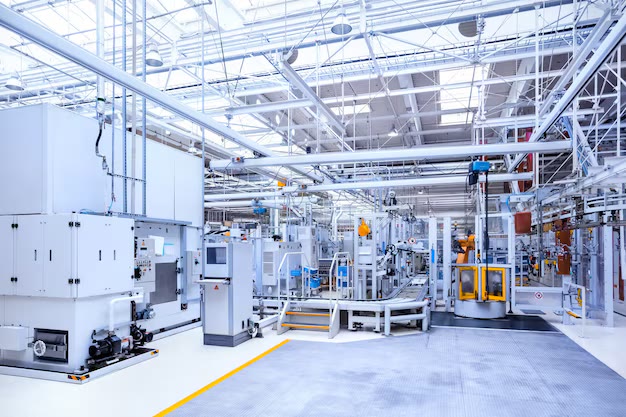
A WMS (Warehouse Management System) runs a warehouse's receiving, put-away, order preparation and shipping in real time, while ensuring stock traceability. This comparison presents the WMS platforms documented on the French market, their indicative pricing by segment and the criteria for choosing well, including for operating autonomous mobile robots in the future.
What is a WMS? Definition
A WMS, short for Warehouse Management System, is the system that orchestrates all of a warehouse's physical and information flows: receiving goods, stock put-away, order preparation, shipping and inventory. It acts as the warehouse's digital "control tower", linked to operators' terminals, automated equipment and the company's ERP.
In practice, a WMS knows at all times where each item is located and in what quantity, and sends operators, or robots, optimised instructions for storing, picking or shipping it.
What a WMS is for: stock management, preparation, traceability
A WMS's role comes down to three main functions, inseparable in a warehouse's day-to-day operation.
Stock and location management
The WMS knows in real time the quantities available, their precise location (aisle, bay, level) and their status (available, blocked, awaiting quality control). It optimises put-away based on item turnover and slot availability, which reduces stockouts and inventory discrepancies.
Order preparation
The WMS orchestrates picking: it determines the most suitable method (by order, by batch, by zone or by wave), generates picking orders and distributes them to preparers via RF scanning, voice picking or pick-to-light. Order preparation alone accounts for 50 to 55% of a warehouse's operating costs (source: Grett; Hardis Supply Chain), so a well-configured WMS is one of the main productivity levers available.
Traceability
Every movement (receiving, transfer, picking, shipping) is logged, with batch number, expiry date or serial number depending on the sector. This traceability is essential in food, pharma or other regulated industries, and makes batch recalls or audits easier.
Comparison of the leading WMS platforms in France
The French market has several well-established WMS vendors, from entry-level software for SMEs to platforms deployed by the largest groups. Sector rankings mainly document nine solutions (source: Amalo Recrutement; Supply Chain Magazine; Logiciels.pro): we present those here rather than padding the list to artificially reach ten — an honest comparison is worth more than an inflated list.
| Vendor / solution | Main target | Positioning | Indicative price range |
|---|---|---|---|
| Reflex WMS (Hardis Group) | Mid-market, enterprise | Established French vendor, strong in distribution/retail | €50,000-200,000+ |
| Generix WMS | Mid-market, enterprise | Collaborative supply-chain platform, SaaS mode | €50,000-200,000+ |
| Speed WMS (BK Systèmes) | SME, mid-market | Modular French solution, accessible entry-level offering | €10,000-50,000 |
| Savoye Odatio | Mid-market, enterprise | Strong integration with mechanised/automated systems | €50,000-200,000+ |
| Manhattan Active WM | Enterprise | International cloud platform, very rich feature set | €200,000+ |
| SAP EWM | Enterprise | Advanced WMS module within the SAP ecosystem | €200,000+ |
| Blue Yonder | Enterprise | International supply-chain solution, built-in AI | €200,000+ |
| Mecalux Easy WMS | SME, mid-market | Often paired with Mecalux racking/automation projects | €10,000-50,000 |
| Odoo Inventory | Micro-business, SME | Open-source ERP module, "lightweight" WMS for small operations | €10,000-50,000 |
These prices are project-level ranges (licence/subscription + integration), excluding hardware, to be refined to your exact scope (source: Amalo Recrutement). This list reflects the vendors documented at the time of writing (August 2026); it is not exhaustive and positioning evolves — an assessment of your needs remains essential before any choice.
WMS pricing: how much does warehouse management software cost?
The price of a WMS project is generally structured by company segment (source: Amalo Recrutement).
- SME: roughly €10,000 to €50,000 for a standard SaaS solution.
- Mid-market: roughly €50,000 to €200,000 depending on functional scope and number of sites.
- Enterprise: €200,000 and above, excluding hardware (terminals, automated equipment, integration with existing systems).
No vendor publishes a universal price list: the final price depends on the number of users, the connectors (ERP, TMS, automated equipment, robots), flow volume and the level of support. A tailored quote remains the only way to get a reliable estimate.
WMS vs TMS vs ERP: what is the difference?
The WMS runs the warehouse's physical execution (stock, preparation, shipping); the TMS (Transport Management System) organises transport (freight booking, routes, delivery tracking); the ERP (Enterprise Resource Planning) manages the whole company, finance, purchasing, production, human resources, and often acts as the central system to which the WMS and TMS feed their data (source: Logicielmag; Travail & Industrie).
WMS and autonomous mobile robots (AMR): how do they interact?
A modern WMS is no longer limited to directing human operators: it can also orchestrate autonomous mobile robots (AMRs), such as an autonomous pallet truck. The principle is simple: the WMS generates a mission order — move a pallet from point A to point B — and sends it, directly or via an intermediate software layer of the WCS (Warehouse Control System) or WES (Warehouse Execution System) type, to the robot, which carries out the task and reports its status in real time.
This interconnection makes it possible to automate replenishment of picking zones, removal of prepared pallets to the shipping dock, or stock-to-dock shuttle runs, without tying up a forklift operator for these trips. It generally requires an interface (API) between the WMS and the robot's fleet management system — a point to validate with your WMS vendor and your AMR supplier before any deployment.
On the regulatory side, two frameworks need to be distinguished: CACES R489 covers ride-on handling trucks, while the framework applicable to autonomous mobile robots rests on the EN ISO 3691-4 standard, supplemented by an authorisation and training defined by the employer. Before connecting an AMR to your WMS, it is advisable to validate this point with your Carsat or the INRS.
How to choose your WMS?
Choosing a WMS depends on several criteria, to be ranked according to your organisation.
- Size and volume: number of order lines per day, number of sites, seasonality of activity.
- Flow complexity: multi-warehouse, multi-channel (e-commerce and B2B), batch or expiry-date management.
- Integration: compatibility with your existing ERP, your automated equipment (conveyors, robots) and your TMS.
- Total budget: licence or SaaS subscription, integration, training, maintenance — not just the headline price.
- Scalability: ability to operate AMRs or a goods-to-person system in the future without rebuilding everything.
- Support and presence in France: support responsiveness, local presence of the vendor or integrator.
For an SME starting out, a modular solution (Speed WMS, Mecalux Easy WMS, or even Odoo Inventory for the simplest needs) often keeps the initial investment down while preserving a path to more advanced features later, including mobile robotics.
FAQ
What is a WMS?
A WMS (Warehouse Management System) is software that manages a warehouse's flows in real time: receiving, stock put-away, order preparation, shipping and traceability. It tells operators, and sometimes robots, where each item is located and generates optimised instructions for moving, picking or shipping it at the right time.
What is the difference between a WMS and an ERP?
The WMS runs the warehouse's physical execution: stock, order preparation, shipping. The ERP manages the whole company, finance, purchasing, production, human resources, and often acts as the central system. The WMS feeds it stock data, while the ERP remains the accounting and commercial source of truth for the entire company.
How much does a WMS cost?
Pricing depends on company size: around €10,000 to €50,000 for an SME on a standard SaaS plan, €50,000 to €200,000 for a mid-market company, and €200,000 or more for a large enterprise, excluding hardware (source: Amalo Recrutement). A tailored quote remains necessary for precise pricing.
Which WMS should an SME choose?
For an SME, it's best to favour a modular, affordable solution such as Speed WMS, Mecalux Easy WMS, or even Odoo Inventory for the simplest needs. The key is to check integration with your existing ERP and choose a tool able to scale, for example towards future control of autonomous mobile robots.
Is a WMS useful for operating autonomous mobile robots?
Yes. A modern WMS can send mission orders to an autonomous mobile robot, such as an autonomous pallet truck, often via an intermediate software layer of the WCS or WES type. The robot carries out the task and reports its status in real time, which automates pallet replenishment and removal without tying up a forklift operator.
Related reading
- Logistics picking: the 8 methods compared
- Goods-to-person: when the warehouse comes to the operator
- Logistics robots: the 7 types of warehouse robot
- Automating a warehouse with no conveyors or construction work
- Do you need a CACES certificate to operate a handling robot?
- Integrating a mobile robot with your WMS via VDA 5050: the exchange protocol, how a WMS actually controls a robot.
- Specifications for a mobile robot in a warehouse: the checklist before a tender.
- Kitting and line-side supply: organising just-in-time, the WMS's role in kit preparation.
Connecting your WMS with a handling robot
A well-chosen WMS organises your flows; but you still need equipment capable of executing its orders with no infrastructure work. The robot, a 2-tonne autonomous pallet truck, interfaces with your information system to automate pallet transport in support of your preparers and forklift operators. Request the free site pre-assessment: a written verdict within 48 business hours on what will work on your site.
Let's assess your aisles before everyone else does
Distribution opens soon in France. In the meantime, four questions are enough: your regional contact sends back a written verdict on your site, with no price and no date.