
CACES for handling robots: is certification required to operate an autonomous robot?
August 18, 2026 · 8 min read
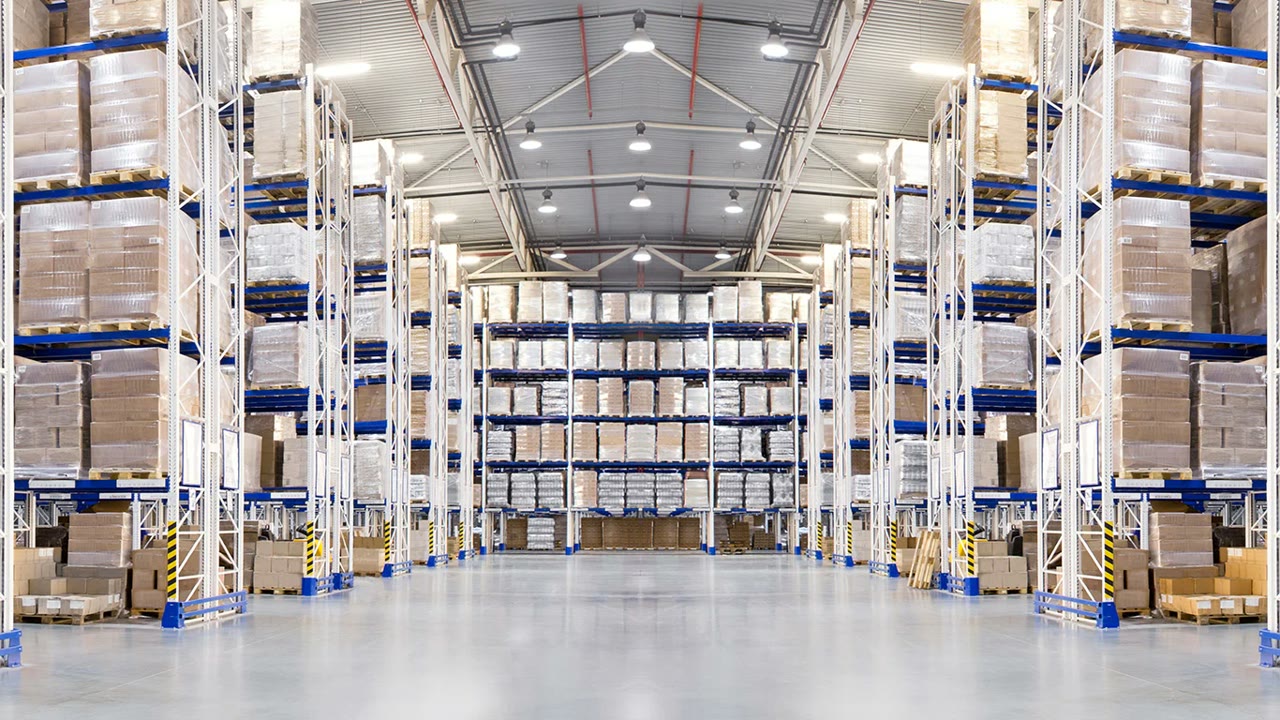
No: CACES R489 does not cover autonomous handling robots, because it applies exclusively to ride-on handling trucks. A robot such as an AMR (an autonomous pallet truck, for example) moves with no one on board, and therefore falls outside the CACES scope — which in no way exempts the employer from training their teams. The applicable technical reference is the EN ISO 3691-4 standard, supplemented by general safety obligations: a point still worth confirming with your Carsat, since no official doctrine has definitively settled the matter to date.
CACES for handling robots: what CACES R489 covers (and does not cover)
CACES R489 is the recommendation that governs "self-propelled ride-on industrial trucks": ride-on pallet trucks, stackers, counterbalance trucks and reach trucks, split into nine categories (1A to 7). Its central criterion is neither the machine's motorisation nor its power, but the physical presence of a driver, at the controls, on board the machine (source: csi-formation.com).
In practice, as soon as an operator steps onto a platform and operates controls to move a load, they fall within the scope of R489. This is the case for a forklift operator on a counterbalance truck, or an operator riding a self-propelled electric pallet truck. The framework was designed for this configuration: only that person is assessed, trained and certified.
An autonomous handling robot matches none of these scenarios: no one rides on board, no one continuously operates a movement control. The question "which CACES certificate do you need to operate a handling robot" therefore, strictly speaking, has no answer in the text of R489 — this framework simply was not designed for this use case.
Why an autonomous robot falls outside the CACES scope
It would be tempting to assume that "operating" a robot from a tablet or an interface is equivalent to "driving" it within the meaning of the French Labour Code. That is not the case. Driving, in the sense used by CACES recommendations, implies direct and continuous control of the machine's movements by an operator who takes responsibility for its trajectory in real time.
An autonomous handling robot, whether a wire-guided AGV or an AMR that maps its own environment, works differently: the operator assigns it a mission (fetch a pallet in zone A, set it down in zone B), and the robot itself calculates and executes its route, detecting obstacles and people in its path on its own. The relationship between human and machine is therefore no longer that of a driver and their vehicle, but that of a supervisor and an automated system.
It is precisely this difference in nature that explains why CACES R489, built around driving in the traditional sense, does not apply to autonomous robots — without this gap being read as a total absence of oversight.
The reference standard for AMRs: EN ISO 3691-4
The text governing the safety of driverless trucks is the NF EN ISO 3691-4 standard, titled "Industrial trucks — Safety requirements and verification — Part 4: Driverless industrial trucks and their systems." Its 2023 version was revised under French leadership, with input from manufacturers such as Balyo, Alstef and KION/Fenwick-Linde, as well as the Ministry of Labour (source: UNM).
This standard governs the design and integration of the robot itself: defining operating zones, detecting people and obstacles, limiting speed according to context, and visual and audible signalling. It is therefore aimed primarily at the robot's manufacturer and integrator, not directly at the operator who supervises it day to day.
It is currently awaiting full harmonisation with Machinery Regulation 2023/1230 in the Official Journal of the European Union, a status worth rechecking at the time of any deployment, since it determines the robot's presumption of conformity (source: UNM, AFNOR).
CACES for handling robots: what the employer must do instead
The absence of a dedicated CACES certificate does not mean an absence of obligations. On the ground, an employer deploying an autonomous handling robot remains bound by the general framework of the Labour Code.
- Update the DUERP. Introducing an autonomous robot is a significant change that must be reflected in the single occupational risk assessment document, with a specific analysis of human-robot interactions.
- Train the operators who supervise the robot. Launching and monitoring missions, taking back manual control, emergency-stop procedures: these actions must be learned, even without driving in the traditional sense.
- Inform and train staff working nearby. Forklift operators, order pickers and pedestrians who share aisles with the robot need to know its behaviour rules and detection limits.
- Define dedicated procedures and signage. Mixed-traffic zones, stopping points, a protocol for malfunctions: all of this needs formalising, following the model of traffic plans already required for conventional trucks.
INRS has published a dedicated study, "Autonomous mobile robots (AMR) in factories and logistics warehouses: prevention challenges," which details these points of vigilance and can serve as a basis for this process (source: INRS, do42).
An official doctrine still uncertain: what you need to know
It needs to be said clearly: as of this article's writing, no official text explicitly rules on how CACES and autonomous handling robots relate. The position set out here — no CACES because there is no ride-on driver, application of EN ISO 3691-4, general employer obligations — is a reading deduced from the scope of R489 and current standards, not a doctrine formally validated by a regulatory text dedicated to AMRs.
This grey area is not specific to Easy to Carry: it runs across the entire sector, as autonomous robots spread faster than regulation is being clarified. Before any deployment, prudence requires having your risk assessment and training plan validated by your regional Carsat, drawing on the publications available from INRS. Written confirmation from your regional fund remains the best legal safety net until a dedicated recommendation for driverless robots is published.
What about other countries?
The EN ISO 3691-4 standard is not a purely French text: it is an ISO standard, adopted into European law, that sets a common technical baseline for the safety of driverless trucks beyond France's borders alone. In theory, this creates a shared design basis for manufacturers and integrators across Europe.
However, the data available does not make it possible to document, country by country, the existence of a CACES equivalent applied specifically to supervisors of autonomous robots. As in France, the subject remains largely governed by general workplace safety obligations rather than a dedicated certification scheme — a finding to treat with caution until an official comparative source is identified.
Summary table: ride-on truck vs autonomous robot
| Situation | Applicable framework | What is required of the employer |
|---|---|---|
| Ride-on handling truck (counterbalance, reach truck, ride-on pallet truck) | CACES R489 (cat. 1 to 7) | Driving authorisation: medical fitness, assessed training, site knowledge |
| Pedestrian-operated stacker | R485 recommendation | Assessed training + driving authorisation as best practice |
| Autonomous handling robot (AMR/AGV) | EN ISO 3691-4 + general obligations under the Labour Code | Up-to-date DUERP, training for supervising operators, information for nearby staff, procedures and signage |
| Staff working near a robot (without supervising it) | General safety obligations (information/training) | Awareness of mixed human-robot traffic rules |
In every case, the absence of a dedicated CACES category for robots must never be read as an absence of obligation: it is a different framework, not a legal void.
FAQ
Does CACES R489 apply to an autonomous handling robot?
No, R489 only covers ride-on handling trucks. An autonomous robot moves with no one on board, so it falls outside this scope. This removes no obligation: the employer must still train the operators who supervise the robot and update its risk assessment, drawing on the EN ISO 3691-4 standard.
Which standard governs the safety of an autonomous handling robot?
The NF EN ISO 3691-4 standard, revised in 2023 under French leadership, governs driverless trucks: operating zones, person detection, speeds and signage. It is aimed primarily at manufacturers and integrators, and is awaiting full harmonisation with the European Machinery Regulation as of this article's writing.
Can an autonomous robot operate among pedestrians?
It depends on the robot and its integration: the EN ISO 3691-4 standard requires person detection and a safe stop or avoidance manoeuvre, but coexistence still depends on the site's risk assessment, defined traffic zones and staff information. Nothing is automatic without dedicated procedures.
What training is needed to supervise a handling robot?
No CACES certifies this function, but training is still required: launching and monitoring missions, taking back manual control, emergency-stop procedures. The employer defines this content in-house or with the robot's supplier, and formalises it within their organisation, following the same principle as a conventional driving authorisation.
Is there an official doctrine on CACES and autonomous robots?
No, no text explicitly settles this subject to date: the position set out here is deduced from the scope of R489 and existing standards, not a formally validated rule. Before any deployment, it is recommended that you have your analysis confirmed by your regional Carsat and INRS publications.
Related reading
- Do you need a CACES certificate to drive an electric or autonomous pallet truck?, the same question applied specifically to the pallet truck.
- CACES R489: the guide to the 9 categories, understand in detail the exact scope of the framework.
- AGV vs AMR: what are the differences?, two robot families, two different navigation and safety logics.
- Will the forklift operator profession disappear because of robots?, the role of humans as robots spread.
- Autonomous pallet truck: the complete 2026 guide, how pallet AMRs work and their use cases.
Considering a handling robot and want to get the regulatory side right before you commit? The robot, a 2,000 kg autonomous pallet truck distributed in France by Easy to Carry, follows this same logic of a supervised robot rather than a driven one. Discover the robot or request the free site pre-assessment: we'll also guide you on the risk assessment and training plan to prepare with your Carsat.
Let's assess your aisles before everyone else does
Distribution opens soon in France. In the meantime, four questions are enough: your regional contact sends back a written verdict on your site, with no price and no date.