
Warehouse racking: the 10 types of racking and how to choose the right one
August 18, 2026 · 9 min read
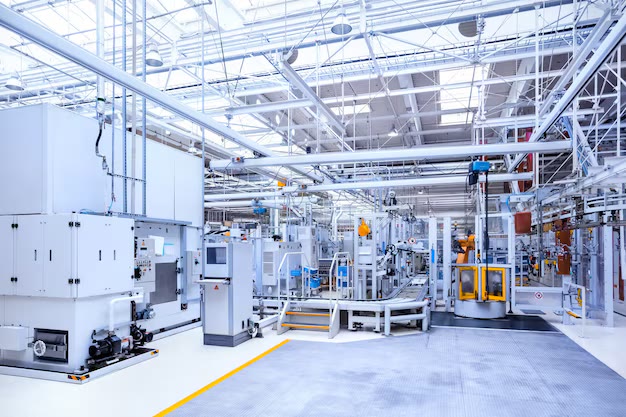
Warehouse racking is chosen based on three criteria: the storage density you need, selectivity (direct access to each pallet) and the nature of your flows (FIFO, LIFO, fast or slow turnover). This guide details the 10 most common types of warehouse racking, from conventional pallet racking to automated racking, along with their use cases, the EN 15635 safety standard and their compatibility with mobile robots.
Warehouse racking: the criteria for choosing
Before comparing systems, three trade-offs shape every warehouse racking project. Density: how many pallets to store per square metre of floor space. Selectivity: the ability to access any pallet directly without moving others. And flow: does your business require FIFO (first in, first out, typical of food products) or can it tolerate LIFO (last in, first out, more forgiving)?
These three criteria often conflict. High-accumulation racking maximises density but sacrifices selectivity; conventional pallet racking does the opposite. There is no single "best" warehouse racking system — only the system best suited to your SKUs, your volumes and your turnover rate.
The 10 types of warehouse racking
1. Conventional (static) pallet racking
Vertical uprights and horizontal beams: each pallet has its own location, directly accessible from the aisle. It's the most widespread system.
Use cases: multiple SKUs, fast turnover, picking. Benefits: maximum selectivity, access to 100% of stock, simple and scalable to install. Limits: the least dense per square metre of floor space, one aisle per row.
2. Drive-in accumulation racking
The forklift drives directly into the structure, between the beams, to stack pallets in depth across several levels, with a single entry/exit point per lane.
Use cases: bulk storage, few SKUs, cold-storage warehouses. Benefits: maximum density. Limits: minimum selectivity (LIFO, last in, first out) and forklift manoeuvring inside the structure itself.
3. Drive-through accumulation racking
A variant of drive-in that opens at both ends of the lane: the forklift enters on one side and exits on the other.
Use cases: just-in-time flow, separate entry and exit, few SKUs. Benefits: true FIFO with high density, unlike classic drive-in. Limits: requires clear access at both ends, which constrains the layout.
4. Dynamic (FIFO) racking
Slightly inclined roller rails: the pallet loaded on one side slides by gravity to the picking face on the other side.
Use cases: products with expiry dates (food, pharma), strict FIFO. Benefits: automatic rotation, high density, loading and picking kept separate with no forklift crossing paths. Limits: higher cost than conventional pallet racking, rails to maintain.
5. Push-back (LIFO) racking
The opposite principle to dynamic racking: pallets sit on rolling carts on a slight incline, loaded from the same side. Each new pallet pushes the previous ones back; on picking, the one closest to the aisle comes out first (LIFO).
Use cases: several pallets per SKU, no strict FIFO requirement. Benefits: loading and unloading from the same aisle, better density than conventional racking. Limits: LIFO logic, unsuited to short-dated products.
6. Mobile (compact) racking
Motorised carriages move on floor rails: the rows compact against each other, with a single aisle opening on demand.
Use cases: archives, cold rooms, expensive real estate, moderate turnover. Benefits: very high density with full selectivity (every pallet stays accessible). Limits: heavier investment, motorisation to maintain, aisle-opening time to factor into throughput.
7. Cantilever racking
Arms cantilevered from vertical columns, with no front uprights that would obstruct loading of long items.
Use cases: tubing, metal profiles, timber, panels — any long load that's hard to palletise. Benefits: clear frontal access, adjustable arm height. Limits: dedicated to long loads, of little relevance for a standard pallet.
8. Storage mezzanine
A raised platform that creates an extra level within the available height, reached by stairs or a goods lift.
Use cases: freeing up floor space for light storage, offices or a preparation area separate from pallet reserve stock. Benefits: makes use of free height without extending the building. Limits: limited floor loading, less convenient than standard racking for a heavy pallet.
9. Light / medium-duty picking racking
Shelves, bins or totes designed for piece-level picking rather than full pallets, often paired with pick-to-light or voice picking.
Use cases: e-commerce, spare parts, orders picked in units or cartons. Benefits: optimised for picking speed and accuracy, density suited to small SKUs. Limits: lower capacity per level, not designed for heavy pallets.
10. Automated racking (stacker crane / AS/RS)
An automated machine replaces the forklift and the forklift operator: it travels down a very narrow aisle, between two very tall racks, to store and retrieve pallets or totes.
Use cases: very large stable volumes, high-density storage at height, warehouses designed from the outset around automation. Benefits: maximum density and height, high throughput, no operators in the aisles. Limits: heavy investment, structure fixed at the design stage, the opposite of the incremental approach of autonomous mobile robots (AMR).
Comparison table of racking types
| Racking type | Density | Selectivity | Flow | Typical use case |
|---|---|---|---|---|
| Conventional pallet racking | Low | Maximum | Free | Multiple SKUs, fast turnover |
| Drive-in | Maximum | Minimum (LIFO) | LIFO | Bulk storage, few SKUs |
| Drive-through | High | Low | FIFO | Just-in-time flow, separate entry/exit |
| Dynamic | High | Medium | Strict FIFO | Food industry, use-by/best-before dates |
| Push-back | High | Medium | LIFO | Multiple pallets per SKU |
| Mobile / compact | Very high | High | Free | Archives, cold rooms, expensive real estate |
| Cantilever | Variable | High | Free | Long loads (tubing, timber, profiles) |
| Mezzanine | — (floor space) | High | Free | Gaining height, light picking |
| Light picking | Medium | Maximum | Free | E-commerce, retail, unit picking |
| Automated (stacker crane) | Maximum | High | Free | Very large volumes, maximum height |
On pricing, only a few market benchmarks are public: conventional pallet racking typically runs €100 to €2,000 per bay, dynamic racking €300 to €4,000 per bay, cantilever racking €200 to €3,000 per column, with used equipment priced at 50-70% of new. Other systems (drive-in, mobile, mezzanine, automated) are quoted per project, based on height, floor area and integration level.
Safety: the EN 15635 standard and racking inspection
Whatever type of warehouse racking is chosen, safety falls under a single reference text: the NF EN 15635 standard, the reference for the use and maintenance of static steel storage systems. It places several obligations on operators.
An expert inspection at least every 12 months, complemented by weekly in-house visual inspections. Damage (bent uprights, deformed beams, loosened anchors) is classified green/orange/red: monitor, repair quickly, or unload and stop use immediately.
The standard also requires load-capacity plates on each bay, stating the permissible load per level and per pallet. It recommends appointing a PRSES (person responsible for storage-equipment safety), who tracks inspections and the action plan. The Assurance Maladie's R 771 recommendation complements this framework.
This baseline applies to fixed racking as well as its automated variants; it combines with traffic rules (aisle width, floor markings, equipment speed) whenever forklifts, people or robots move between the bays.
Warehouse racking and mobile robots: aisle widths and AMR compatibility
Choosing a type of warehouse racking doesn't only determine storage density: it also sets aisle width, and therefore compatibility with handling equipment, whether forklifts or autonomous mobile robots (AMRs).
There is no single legal aisle width in France: it's the employer who defines it in their risk assessment, drawing on INRS benchmarks (fact sheet ED 6002). Common rules of thumb: one-way aisle = equipment/load width + about 1 m; two-way = twice that width + about 1.40 m. In practice, a counterbalance forklift needs 3 to 4 m, a reach truck 2.5 to 3 m, a very narrow aisle (VNA) truck under 2 m.
This hierarchy informs the choice of racking. Conventional pallet racking served by a counterbalance forklift requires wide aisles, hence lower density; switching to a reach truck densifies storage without changing racking type. Mobile racking takes this logic to the extreme by opening only one aisle at a time. Drive-in, meanwhile, requires the forklift to manoeuvre inside the structure — to be validated with the manufacturer before any robotisation project.
For AMR-type autonomous pallet trucks, the prerequisite is comparable to that of an electric forklift: the robot, for example, is designed to pick up a pallet at 90° in a 2-metre aisle. Conventional pallet racking, dynamic racking or cantilever racking served by aisles of that order are therefore generally compatible with this type of robot, with no construction work or reconfiguration of the existing racking — the whole appeal of flexible automation compared with fixed automated systems like the stacker crane, designed from the outset for a single mode of operation.
FAQ
What is the safety standard for warehouse racking?
It's the NF EN 15635 standard, which governs the use and maintenance of metal racking: an annual expert inspection, weekly visual inspections, damage classification (green/orange/red), mandatory load-capacity plates and the in-house appointment of a PRSES. It is complemented by the R 771 recommendation.
How much distance should be left between racks for a forklift?
There's no single legal aisle width: the employer sets it based on the equipment used. Common benchmarks: counterbalance forklift 3-4 m, reach truck 2.5-3 m, very narrow aisle (VNA) truck under 2 m. A one-way aisle = equipment width + about 1 m; for two-way traffic, allow two widths + about 1.40 m.
Which type of racking should you choose for high storage density?
Drive-in racking offers maximum density, followed by mobile (compact) racking, which also keeps full selectivity despite having no fixed aisles. Dynamic and push-back racking are good density/rotation compromises. Conventional pallet racking remains the least dense but the most selective.
Is standard racking compatible with an autonomous pallet-truck robot?
Generally yes: an AMR such as the robot operates in aisles of around 2 metres, comparable to those of a standard electric pallet truck. Conventional pallet racking, dynamic racking or cantilever racking served by this type of aisle are compatible with no reconfiguration; the drive-in case still needs to be validated with the manufacturer.
What is the difference between drive-in racking and dynamic racking?
Drive-in stores pallets in depth, with no rails, with a single access point and LIFO logic (last in, first out). Dynamic racking uses inclined roller rails: the pallet slides by gravity from the loading side to the picking side, which guarantees true FIFO, essential for products with expiry dates.
Related reading
- Automating a warehouse with no conveyors or construction work, how an AMR fits into existing racking, with no reconfiguration.
- Autonomous pallet truck: a complete overview, the specifications of the autonomous pallet truck mentioned in the aisles section.
- Euro pallet dimensions: the complete guide, for sizing each racking bay correctly.
- Picking: the 8 methods compared, the natural extension of light picking racking.
- Do you need a CACES certificate for an electric or autonomous pallet truck?, the regulations for equipment moving between your racks.
Fitting out or reconfiguring your warehouse and want to plan ahead for robotising pallet transport? Easy to Carry distributes the autonomous pallet truck in France, an autonomous pallet truck compatible with most existing racking, with no construction work. Discover the robot or request the free site pre-assessment: we check the compatibility of your aisles and racking based on your answers.
Let's assess your aisles before everyone else does
Distribution opens soon in France. In the meantime, four questions are enough: your regional contact sends back a written verdict on your site, with no price and no date.