
Co-packing in logistics: definition, operations, obligations and pallet flows
October 8, 2026 · 8 min read
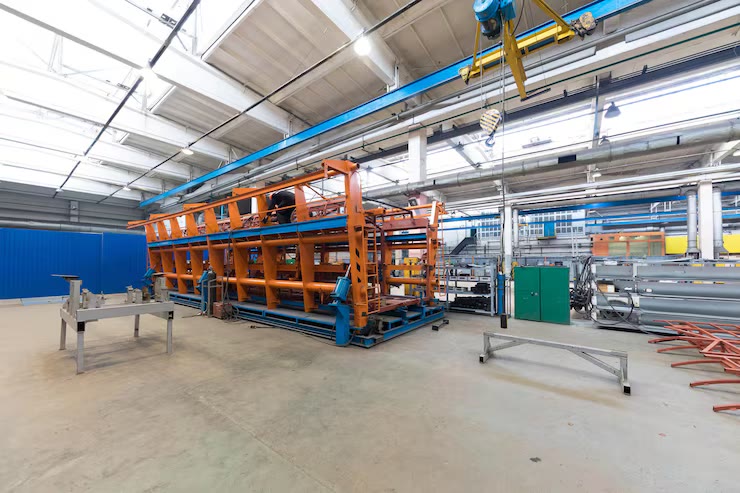
Co-packing means entrusting a provider with packaging operations on products that are already packed: promotional bundles, multipacks, gift sets, labelling, shrink-wrapping, display preparation. The product itself is not touched, which sets it apart from co-manufacturing. In practice it is a pallet business: pallets of products come in, are broken down, the goods are repacked and new pallets are built for dispatch.
What co-packing is
FM Logistic, one of the providers that has built an offer around it, sums up co-packing as a set of operations “diverse in scope and in the level of intervention on the product”: multipacks, mixes, promotional bundles, labelling, shrink-wrapping and display preparation (FM Logistic). The common thread: work on the secondary packaging of an already sealed product. The term covers both the activity and the provider, the “co-packer”.
Co-manufacturing, by contrast, works on the product itself: filling, primary packaging, bottling. It is a manufacturing step, with heavier investment and usually long contracts. Kitting is a cousin of co-packing: it groups components into kits for a production line or an order, rather than finished products into sales bundles.
Common operations
- Bundles and multipacks: grouping several units (“3 for 2”, family pack) under film or in a carton.
- Assortments and gift sets: mixing references in one pack, for example for the holidays.
- Labelling and compliance: applying a language label, a promotional code, a price sticker.
- Shrink-wrapping, bundling, flow-wrap: grouping and protecting under shrink film.
- POS and displays: assembling and filling displays delivered ready to place in store.
- Repacking: changing the sales unit or case configuration for a customer or a country.
For the brand, the benefit is flexibility: a promotion can be set up in a few weeks without touching the production line. FM Logistic also highlights keeping packaging materials and finished products in the same warehouse to simplify traceability (FM Logistic France).
Who does co-packing
Three kinds of players share the market. Logistics providers (3PLs) add it to their warehousing offer: the product never leaves the warehouse. Specialist co-packers run dedicated lines and machines. And in France, the sheltered and adapted work sector, adapted companies (EA) and work-support establishments (ESAT), often offers shrink-wrapping, repacking, labelling and truck loading, as shown by brochures circulated by the national union of adapted companies (UNEA).
That last option affects the French obligation to employ disabled workers: according to the Agefiph fact sheet, subcontracting to an EA, an ESAT or a self-employed disabled worker allows 30% of the labour cost to be deducted from the contribution, within ceilings (Agefiph, OETH sheet). Check the exact rule and current ceilings with your HR department. An ESAT is a medico-social structure that enables a person with a disability to work (Service-Public).
Obligations by product type
The co-packer does not manufacture, but it handles packaging, and so sometimes consumer information and traceability. Three cases come up often.
Food. The operator responsible for labelling is the one under whose name the food is marketed; an operator who modifies the information accompanying the food is responsible for that modification (Regulation (EU) 1169/2011, Article 8, EUR-Lex). In France, mandatory information must be at least in French and a lot number ensures traceability (DGCCRF). Every operator must be able to say who supplied a product and to whom it was delivered (Regulation (EC) 178/2002, Article 18, EUR-Lex). If the co-packer adds packaging in contact with the food, that material falls under Regulation (EC) 1935/2004 (EUR-Lex).
Cosmetics. A distributor becomes the “responsible person” if it places the product on the market under its own name or modifies it in a way that affects compliance, and the label must carry a batch number (Regulation (EC) 1223/2009, Articles 4 and 19, EUR-Lex).
In every case, the specification must state who signs off label proofs, how original batches are carried over to repacked batches, and what happens to non-compliant units. The dates (use-by or best-before) of grouped products must remain legible and consistent within a bundle.
The pallet flow of a co-packing operation
Seen from the dock, a co-packing operation is a succession of pallet movements. Pallets of products and packaging materials arrive, are checked and stored. They are then brought to the line, often in small quantities so as not to clutter the stations. Operators break down the pallets, repack, then build pallets of finished goods, wrapped and labelled (palletising, SSCC label), which go back to storage or to dispatch.
Each pallet therefore makes at least four trips: dock to storage, storage to line, line to storage or dock, and the return of empty pallets. Over a promotional campaign of several weeks, these runs keep forklift drivers busy full time, while the added value is on the line. It is the same logic as feeding production lines, which we describe in our article on the automated milk run.
In-house or outsourced co-packing
Many manufacturers and retailers hesitate between setting up a co-packing area in their own warehouse and outsourcing campaigns to a provider. Three criteria decide in practice. The first is regularity: an in-house area only pays off if operations recur all year, otherwise stations and space stand empty between campaigns. The second is proximity to stock: if the products are already stored at a logistics provider, co-packing there avoids two transports and two receptions. The third is confidentiality and control: a brand preparing a launch, or that must approve each batch, sometimes prefers to keep the operation in sight.
Either way, the area is sized first by its pallet flows, before its machines. It needs a buffer zone for incoming pallets, line-side locations for only a few pallets, an area for finished-goods pallets awaiting wrapping and a circuit for empty pallets. An area whose aisles are cluttered with waiting pallets loses more throughput than it gains from a faster machine. So measure the number of incoming and outgoing pallets per campaign hour before drawing the stations.
Choosing a co-packing provider
None of the providers consulted publishes a price list: the price depends on the number of handlings per unit, throughput, machines and campaign length. To get comparable quotes, send each provider the same file: description of the final unit with a photo or mock-up, volumes and schedule, number of incoming references, materials supplied or to be bought, labelling and traceability requirements, outgoing pallet format. Ask for a pilot run before the campaign, and for the throughput actually achieved on a comparable operation.
FAQ
What is co-packing?
Packaging operations carried out on products that are already packed: multipacks, promotional bundles, gift sets, labelling, shrink-wrapping, display preparation. The product itself is not modified. They are entrusted to a logistics provider, a specialist co-packer or the sheltered work sector.
What is the difference between co-packing and co-manufacturing?
Co-packing works on the secondary packaging of an already sealed product. Co-manufacturing works on the product itself: filling, primary packaging, bottling. It is a manufacturing step, requiring more investment and usually long contracts.
Who is responsible for the label of a food promotional bundle?
The operator under whose name the food is marketed, under Article 8 of Regulation (EU) 1169/2011. An operator who modifies the information accompanying the food is responsible for that modification. The specification should state who signs off the label proof.
Does the co-packer have to ensure traceability?
Yes for food: every operator must be able to identify who supplied a product and to whom it was delivered (Regulation (EC) 178/2002, Article 18). For cosmetics, the label must carry a batch number. Original batches must therefore be carried over to repacked batches.
How much does a co-packing service cost?
There is no public price list: the price depends on the number of handlings per unit, throughput, machines and campaign length. To compare, send each provider the same file and ask for a pilot run.
Related reading
- Food logistics: automating without risking traceability.
- Automated milk run: feeding lines with pallets without a dedicated driver.
- Picking methods, for the operations downstream of co-packing.
- How many pallets per truck, to prepare dispatch.
- Industrial production: automating pallet flows at the line.
Do your co-packing operations tie up forklift drivers bringing pallets to and from the lines? The Easy to Carry autonomous pallet truck runs between storage, lines and docks. Discover the robot or have your aisles checked.
On the same topic
Let's assess your aisles before everyone else does
Distribution opens soon in France. In the meantime, four questions are enough: your regional contact sends back a written verdict on your site, with no price and no date.