
Food industry logistics: automating without breaking the HACCP chain
August 18, 2026 · 8 min read
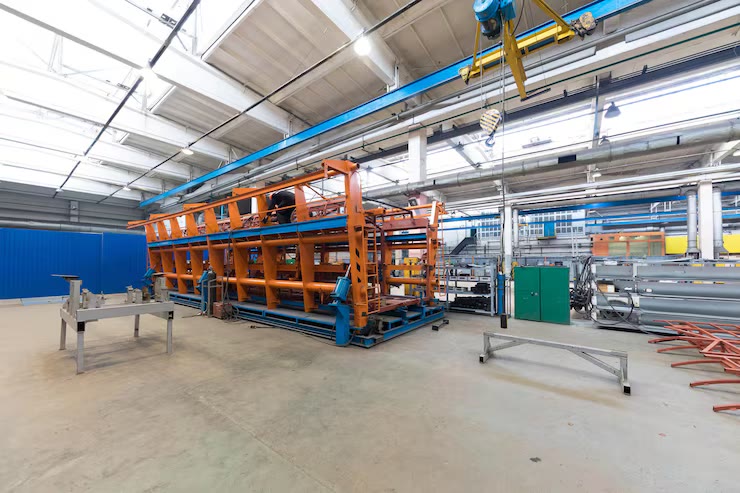
Food industry logistics has to reconcile two demands that can seem to pull in opposite directions: speeding up pallet flows while never breaking the HACCP chain — lot traceability, no mixing, hygiene, cold-chain compliance. A poorly prepared automation project can weaken a quality audit; a well-designed one can actually strengthen traceability. This guide details the real constraints and where an autonomous pallet truck like the robot fits into this context.
Food industry logistics: why HACCP changes the automation equation
The food industry is France's leading industrial sector: around 20,000 companies, nearly €250 billion in revenue, about 520,000 employees, and 70% of agricultural production processed (source: ANIA). It's a massive sector, but also one of the most heavily regulated in all of logistics.
The « Hygiene Package »: the regulatory basics to know
European regulation EC 852/2004 requires the HACCP method (Hazard Analysis Critical Control Point) for every operator in the food chain, from production to distribution (source: EUR-Lex). Regulation 178/2002 adds an upstream and downstream traceability obligation: every lot must be traceable, from its supplier through to its customer (source: agriculture.gouv.fr). In food industry logistics, this is never just theory: it dictates how the warehouse itself is organised.
What HACCP concretely requires of logistics
On the ground, the HACCP method translates into very operational rules: strict tracking of use-by dates and lot numbers, a ban on mixing different lots on the same pallet, continuous cold-chain compliance, and adapting to end-of-line production rates (source: Alstef Group). Any break in this chain — a mislabeled lot, a pallet left out of temperature too long — becomes a potential non-conformity during an audit.
The specific constraints of food industry logistics
Automating food industry logistics means dealing with requirements not found — or not to the same degree — in a general-purpose warehouse.
Hygiene and cleaning: cycles that set the pace of operations
Food industry handling areas are subject to regular cleaning and disinfection protocols, sometimes daily depending on the products handled. Any equipment operating in these zones — human or robotic — must work around these cycles without disrupting them, and without itself becoming a point of cross-contamination between lots.
Temperature: ambient, chilled and frozen, rarely uniform across one site
A food industry site often combines several temperature zones within a single flow: ambient dock receiving, chilled storage for fresh products, sometimes frozen storage for deep-frozen goods. This variety complicates any automation project, because a solution validated in an ambient zone is not automatically validated in a cold room.
Traceability and lot segregation: the requirement that shapes the flows
Every pallet must stay linked to its lot and use-by date throughout its logistics journey. An automated flow must therefore preserve this link — no mixing pallets, no loss of identification — or risk complicating, or even invalidating, the traceability required in the event of a product recall.
End-of-line rates: a flow that never stops
At the end of production, pallets follow one another at a pace set by the line, not by logistics. The end-of-line → wrapper → dock stage is a classic pressure point: any bottleneck here feeds straight back to production.
| Food industry constraint | What this means for logistics | What to watch for with a mobile robot |
|---|---|---|
| HACCP (EC reg. 852/2004) | End-to-end traceability mandatory | Mission logs usable as audit evidence |
| Lot traceability (reg. 178/2002) | No mixing, continuous pallet identification | No mixing up lots on the same route |
| Cold chain | Ambient / chilled / frozen zones | Thermal compatibility to check zone by zone |
| Cleaning/hygiene | Regular cleaning cycles for the zones | Robot must coexist with protocols without disrupting them |
| End-of-line rates | Continuous flow, little tolerance for stoppages | Reliability and availability during production slots |
How an autonomous pallet truck fits in without breaking the HACCP chain
Food industry automation isn't about replacing existing HACCP controls, but about integrating with them without weakening them — and, on certain points, even strengthening them.
Digital mission traceability: an audit aid, not a substitute
An autonomous pallet truck like the robot carries out missions controlled and supervised via its supervision platform, with task dispatch, APIs and fleet tracking. Each mission — origin, destination, timestamp — can therefore serve as a digital record that complements existing lot records, useful in an HACCP audit. This is a logistics traceability aid, not an HACCP management system in itself: product traceability (lots, use-by dates) remains handled by the WMS and the existing quality processes.
Fewer contact points and human trips on repetitive flows
Handing the end-of-line → wrapper → dock pallet shuttle to a robot mechanically reduces the number of human trips on this repetitive route. Fewer manual back-and-forths mean potentially fewer unnecessary points of contact with already-wrapped pallets — something that can support an overall hygiene approach, without replacing existing cleaning protocols and PPE.
A flow that can preserve lot segregation
Driven by defined missions (one pallet, one origin, one destination), a handling robot follows a set route without improvising pallet groupings. This is structurally compatible with the requirement to keep lots separate, provided the integration with the WMS and the layout of drop-off zones is planned upfront with your quality teams.
The point to watch: cold compatibility isn't a given
The robot lists a 2,000 kg capacity, relevant for the beverage and liquid pallets common in the food industry, but its operating temperature range is not publicly documented at this time. For any chilled or frozen zone, assume no compatibility either way: written confirmation from Easy to Carry is required before committing to a project in these zones. For ambient areas and dock receiving, this doesn't come into play.
CACES, autonomous robots and audits: a still-cautious doctrine
CACES R489 covers ride-on handling trucks; as things currently stand, it does not cover operating an autonomous robot. The reference standard for this equipment is EN ISO 3691-4, backed up by authorisation and training issued by the employer. Before any deployment, it's advisable to have your safety and supervision setup validated with your Carsat or the INRS, including how it fits with your internal HACCP procedures.
Food industry automation: what French manufacturers are already doing
Heavy automation has already made significant inroads in the sector, through players like Alstef (formerly BA Systemes), which lists major food industry clients: Candia, Yoplait, Entremont, Brioche Pasquier, Bonduelle, Charal, Heineken and Nestlé Purina, for AGV and automated storage solutions (source: Alstef Group).
These installations are mostly heavy conveying and automated storage — a major, structural investment designed for large, stable volumes. The autonomous pallet truck takes a different approach: incremental automation, deployed with no infrastructure work, on targeted flows such as end-of-line shuttles, with no need to overhaul an entire site.
How to launch an automation project in food industry logistics
Step 1, Map your flows and temperature zones. Clearly identify your ambient, chilled and frozen zones, along with the existing HACCP control points on every flow that's a candidate for automation.
Step 2, Involve your quality teams from the design stage. Integrating a handling robot must be validated with the site's HACCP and hygiene managers, not just the logistics team: this is what ensures automation strengthens traceability instead of complicating it.
Step 3, Start with a simple flow, in a documented ambient or chilled zone. End-of-line → wrapper → dock shuttles are a relevant entry point: a repetitive, steady flow with an immediate gain in timestamped traceability.
Step 4, Verify every compatibility point before committing to the project. Operating temperature, cleaning protocols, WMS integration: demand written answers rather than assumptions, especially for cold zones.
Step 5, Lock down the regulatory side. Validate the applicable safety framework (EN ISO 3691-4, employer-issued training and authorisation) with your Carsat or the INRS before any deployment in production.
FAQ
Can a handling robot operate in an area subject to HACCP?
Yes, a handling robot can operate in an HACCP area provided it's integrated with the existing quality processes: traceable missions, respect for lot segregation, and coexistence with cleaning cycles. It complements traceability — it doesn't replace the WMS or the HACCP controls already in place on site.
Does the autonomous pallet truck work in a cold room?
Its operating temperature range is not publicly documented at this time on the official product sheet. So compatibility with chilled or frozen conditions should be neither assumed nor ruled out. For any refrigerated zone, written confirmation from Easy to Carry and the manufacturer is essential before committing to a project.
Do you need a CACES certificate to operate an autonomous robot in the food industry?
CACES R489 covers ride-on handling trucks, not autonomous robots. The applicable reference is the EN ISO 3691-4 standard, with training and authorisation issued by the employer. It's advisable to have this safety setup validated with your Carsat or the INRS before any deployment in food industry logistics.
Why automate food industry logistics rather than keep a manual flow?
Because end-of-line flows there are repetitive, steady-paced and subject to a strong traceability requirement. Automating a pallet shuttle reduces human trips on a repeated route, produces a timestamped history usable in an HACCP audit, and frees up operator time for higher-value tasks, without replacing existing quality controls.
Which food industry manufacturers have already automated their logistics in France?
Alstef (formerly BA Systemes) lists major food industry clients such as Candia, Yoplait, Bonduelle, Charal, Heineken and Nestlé Purina, for AGV and automated storage solutions. These deployments are mostly heavy automation; the autonomous pallet truck offers a more incremental alternative, with no infrastructure work.
Related reading
- The autonomous pallet truck: a complete overview of the autonomous pallet truck, every documented specification, including areas of uncertainty such as temperature.
- Automating handling in a cold-storage warehouse, for food industry sites with frozen zones.
- CACES and handling robots: what you need to know, the regulatory framework to validate before any deployment.
- AGV vs AMR: the differences, understanding the choice between heavy automation and a flexible mobile robot.
- Automating a warehouse with no conveyors or construction work, the incremental approach, complementary to heavy automation like Alstef's.
- Mobile robot in a washable food industry area: IP69K and compliance, the detailed washdown and sealing requirements.
- Integrating a mobile robot with your WMS using VDA 5050: the exchange protocol, mission traceability on the system side.
An automation project in food industry logistics? Every site has its own temperature zones and its own HACCP procedures: no generalisation replaces an on-the-ground assessment, done together with your quality teams. Discover the robot or contact Easy to Carry to study the feasibility of your project, flow by flow.
Let's assess your aisles before everyone else does
Distribution opens soon in France. In the meantime, four questions are enough: your regional contact sends back a written verdict on your site, with no price and no date.