
Wire-guided AGV: how it works, floor work, limits and alternatives
October 8, 2026 · 8 min read
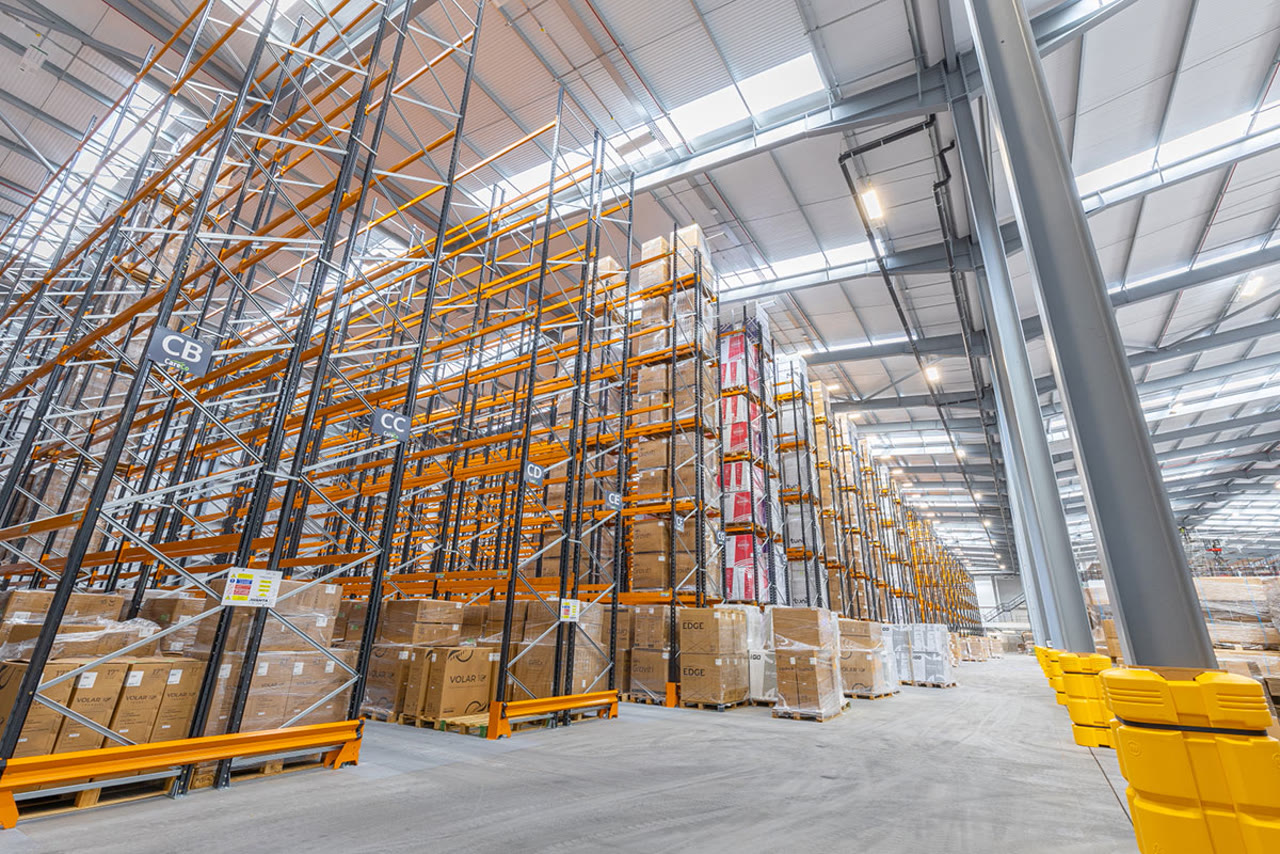
A wire-guided AGV follows a copper wire laid in a slot in the floor and carrying an alternating current: its antennas measure the magnetic field around the wire and correct the steering continuously. The guidance is robust and precise, but it requires work on the floor slab and freezes the routes: every change to the circuit means cutting the floor again. That is why it still dominates very narrow aisles with fixed routes, and is losing ground everywhere else.
How a wire-guided AGV works
Wire guidance comes down to three elements. A generator sends a low-voltage alternating current through a copper wire laid in the floor. The current creates a magnetic field around the wire. Under the vehicle, antennas measure this field and the controller corrects the steering to stay centred on the wire (Jungheinrich, narrow-aisle warehouse guide).
The figures published by manufacturers give an idea of the system: the Jungheinrich generator offers 6 frequencies from 4 to 9.5 kHz, with a loop current of 25 to 120 mA and up to 4 loops of 1,000 m. On the vehicle side, the Götting HG G-19200 antenna works between 3 and 25 kHz and reads the wire from a height of 30 to 100 mm. Several frequencies allow several circuits to coexist: at Jungheinrich, two wires on the same frequency must stay at least 1.5 m apart.
The wire only tells the vehicle where the centre of the track is. To know where it is on the circuit and when to stop, the AGV relies on additional markers, such as RFID transponders set in the floor, as on Jungheinrich’s automated turret trucks.
Floor work: slot, slab, tolerances
Wire guidance starts with building work. A slot about 15 to 20 mm deep and 4 to 6 mm wide is cut, the cable is laid in it, and the slot is filled flush with resin (Jungheinrich; AGVS Industries). In a racking aisle, the wire is laid after the racks are installed, with a tolerance of ±5 mm from the aisle centreline along its whole length.
The slab itself must be suitable. Jungheinrich requires the reinforcement mesh to sit more than 50 mm below the wire, fibre-reinforced concrete to contain no more than 30 kg of steel fibre per m³, and no metal section to run within 250 mm of the wire. Crossing an expansion joint requires a double-sheathed wire. An industrial flooring specialist also warns that cutting can crack a jointless steel-fibre slab (CoGri).
Before any project, ask your engineering office three questions: where is the reinforcement, what is the fibre content, and was the slab poured with or without joints?
The strengths of wire guidance
The wire has three qualities other guidance methods do not always match. It is insensitive to dirt, oil and tyre marks, unlike optical guidance along a painted line (Götting). It allows fast aisle entry and high speeds on the track. And it depends neither on lighting nor on clutter: as long as the wire is intact, the trajectory stays the same.
That is why it has long equipped turret trucks in very narrow aisles, including manned ones. Toyota Material Handling Europe describes it as the most common guidance for these trucks (Toyota Material Handling Europe). In that case the wire handles steering while the driver handles lifting; if the signal is lost, the truck slows down and stops.
Wire or rail in very narrow aisles
In a very-narrow-aisle store, around 1,500 to 1,800 mm wide according to Mecalux, the truck must be guided, with or without a driver. Two solutions compete: the embedded wire and the guide rail fixed at the foot of the racking. The wire keeps the floor clear and frees the aisle entrance; the rail is mechanical and a truck is harder to derail from it.
The choice affects the layout. Jungheinrich uses a lateral safety clearance of 125 mm between truck and racking with inductive guidance, against 100 mm with rail guidance: over a long aisle, those 25 mm per side add up to storage locations. The wire circuit also has its own logic: the loop runs from one aisle to the next, hence an even number of aisles or an extra return wire.
On cost, manufacturers do not agree: Toyota Material Handling Europe presents wire as cheaper than rail for turret trucks, while the group’s US subsidiary considers it more expensive to install for order pickers. The only reliable answer is a side-by-side quote on your own layout.
The limits: a frozen circuit
The downside is direct: the track is the slot. Adding a station, moving a dock or reorganising an area means cutting again, laying cable and recommissioning. On a site where flows change with seasons or customers, that cost comes back with every change.
A damaged wire also immobilises the vehicle on that section, and the slab keeps the scar of every modification. Finally, there is no reliable public price for a complete system: the only figures found cover the supply of cable alone in the United States, without installation, electronics or commissioning. A wire-guided project is quoted on drawings.
Wire guidance or other guidance?
| Guidance | Infrastructure | Changing a route | Strength |
|---|---|---|---|
| Embedded wire | Slot + cable + generator | Floor work | Robustness, very narrow aisles |
| Magnetic tape or spots | Tape glued or spots set in the floor | Re-laying tape or spots | Lighter installation; tape wears under heavy traffic |
| Laser with reflectors (LGV) | Reflectors on walls and columns | Reprogramming | Precision: ±4 mm quoted for a SICK NAV350 sensor |
| Natural navigation (SLAM) | None: the building map is learned | Map update | Existing sites, changing flows |
Magnetic tape wears under heavy truck traffic; spots can be reprogrammed but need careful installation in the floor (Scott Automation). Optical guidance follows a painted line, simpler to install but sensitive to dirt. Natural navigation, used by AMRs, reads the surroundings with a LiDAR and needs no floor work. Our AGV vs AMR comparison details the two approaches.
When to choose a wire-guided AGV
The wire remains a good choice when three conditions are met: very narrow, very high aisles, routes that will not change for years, and a new or compatible slab. That is typically the narrow-aisle store built around its turret trucks, or a fixed production loop.
Conversely, in an existing building where the job is moving pallets between docks, storage and lines along routes that change, an infrastructure-free vehicle avoids both the building work and the cost of each change. See our guide to automating a warehouse with no building work.
Whatever the guidance, a driverless truck falls under ISO 3691-4:2023 for person detection, speeds and operating zones.
FAQ
How does a wire-guided AGV work?
A generator runs an alternating current, of a few kilohertz, through a copper wire embedded in the floor. Antennas under the vehicle measure the wire’s magnetic field and the controller corrects the steering to stay centred on it. Floor markers such as RFID transponders tell the vehicle where it is on the circuit.
What slot does wire guidance need?
Manufacturers specify a slot about 15 to 20 mm deep and 4 to 6 mm wide, filled flush with resin. In a racking aisle, the wire is laid after the racks are installed, with a tolerance of ±5 mm from the aisle centreline.
Can any slab take wire guidance?
No. Jungheinrich requires reinforcement more than 50 mm below the wire, at most 30 kg of steel fibre per m³ and no metal section within 250 mm of the wire. Cutting can also crack a jointless steel-fibre slab. Have the slab checked before any project.
Wire guidance or laser guidance?
Wire copes better with dirt and suits very narrow aisles, but it freezes the routes. Laser guidance with reflectors can be reprogrammed without floor work, with a quoted precision of ±4 mm for some sensors. For a site with changing flows, laser or natural navigation is more flexible.
How much does a wire-guided AGV cost?
There is no reliable public price for a complete system: the cost depends on circuit length, slab condition, the number of vehicles and integration. The only public figures cover the cable alone. Ask for a quote on drawings that includes the slot, installation and commissioning.
Related reading
- AGV vs AMR: what are the differences?, the two main families of automated vehicles.
- Automating a warehouse with no building work, the alternative to wire guidance.
- Warehouse aisle width: the dimensions to know before automating.
- Stacker cranes: the other guided machine of narrow aisles, on a rail.
- The autonomous pallet truck: navigation with no wire, tape or reflector.
Torn between a wire-guided circuit and an infrastructure-free robot? The Easy to Carry autonomous pallet truck works in your current aisles with no slot or reflector. Discover the robot or have your aisles checked: your regional contact sends back a written verdict on your site.
Let's assess your aisles before everyone else does
Distribution opens soon in France. In the meantime, four questions are enough: your regional contact sends back a written verdict on your site, with no price and no date.