
Flexible warehouse automation: the AMR approach to automating without conveyors or construction work
August 18, 2026 · 9 min read
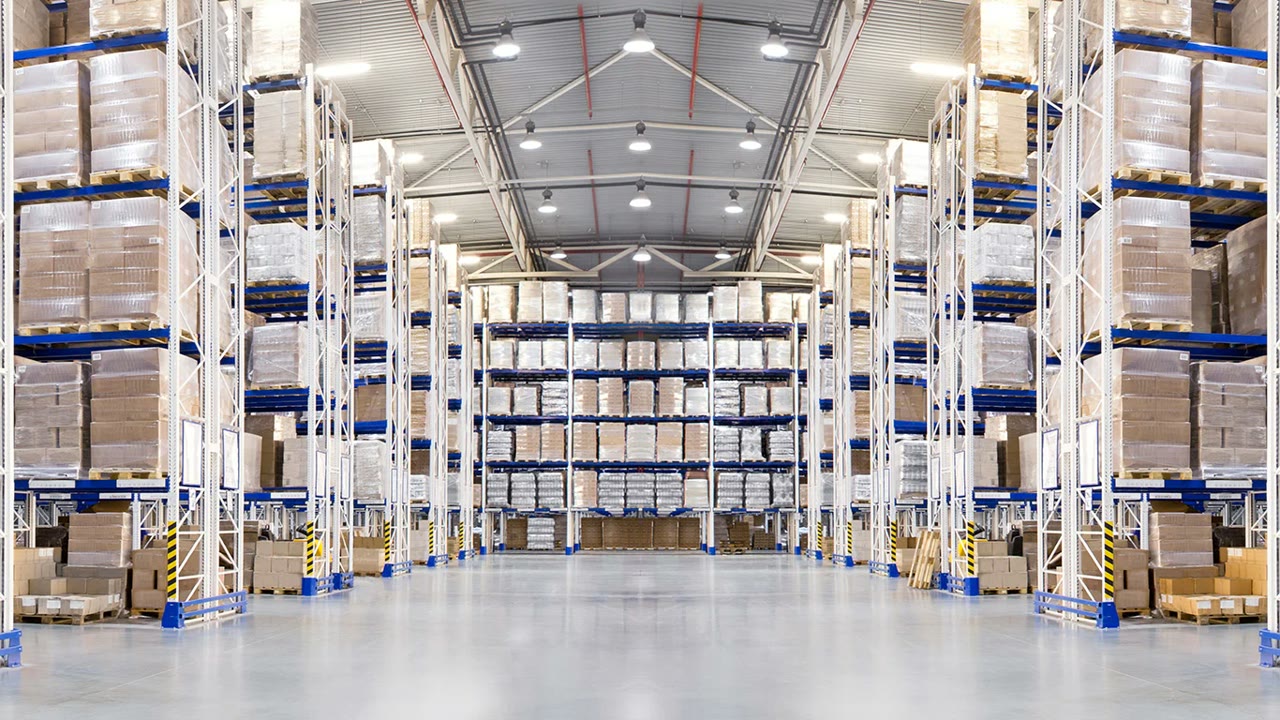
Yes, you can automate a warehouse with no conveyors, no stacker cranes and no changes to the building: AMRs (autonomous mobile robots) map the existing site, deploy in a few days to a few weeks and scale robot by robot, with no interruption to operations. This guide to flexible warehouse automation details the incremental path for SMEs: which flow to automate first, running a pilot project, budget and grants.
Why heavy automation locks out SMEs
An SME leader looking to automate a warehouse first comes across the offering from the major integrators: Mecalux, KNAPP, Alstef, Savoye. Impressive installations, but designed for large accounts: conveyors, stacker cranes, goods-to-person systems sized site by site. For an SME, this model runs into three walls.
The CAPEX and commitment wall
A fixed installation is a full engineering project: layout studies, hardware, civil works, software, commissioning. The investment is depreciated over many years and locks in the flow configuration from the moment the contract is signed. Hard to take on without an in-house automation team or five-year visibility on your activity.
The construction-work and operations wall
Conveyors and stacker cranes require a construction project: floor anchoring, structures, possible slab work, weeks or months of installation. Yet a warehouse that ships every day cannot stop. And if the building is rented, a common case, any major modification raises the question of restoring the site at the end of the lease.
The rigidity wall
A fixed installation optimises today's flow. If volumes, references or the layout change, every evolution becomes a new project, with new construction work. The market is penalising this rigidity: mobile robots are growing by around 19% a year through 2030 (from ~$5 billion to ~$14 billion), against 2.4% a year for fixed automation (source: Interact Analysis, January 2026).
French reality confirms this: AGV sales there have been estimated at 500 to 600 machines a year, with average projects of 3 to 4 machines (source: Toyota Material Handling France, Voxlog report). Automating a warehouse in France is already, in practice, an incremental process.
Flexible warehouse automation: what the AMR approach changes
An AMR (autonomous mobile robot) navigates with no guidance infrastructure whatsoever: using its sensors (LiDAR, cameras) and SLAM mapping, it builds a map of your building as it actually is, locates itself within it in real time and calculates its routes. Applied to pallets, this is the autonomous pallet truck. Four concrete breakthroughs follow for an SME.
Zero modification to the building. No floor wiring, reflectors or rails: the robot maps the existing site. A layout change is handled with a software update to the map, not a construction project. Reversible, a real advantage in a rented building.
Deployment in days or weeks. The typical timeline for an AMR pilot: site mapping, mission definition, testing, training. Not comparable to a fixed-installation construction project.
Operations that never stop. Mapping and commissioning happen while the site is running. AMRs are designed for co-activity: they detect people and vehicles, slow down, go around obstacles or recalculate their route, within the framework of the NF EN ISO 3691-4 standard that governs driverless industrial trucks.
Scaling up robot by robot. You start with one machine on one flow, measure the results, then add robots or zones through simple configuration. Some French fleets reach 30 to 40 units (source: MiR, Voxlog report); all of them started small.
The market validates this approach: the AMR segment is expected to reach $9.56 billion by 2030, growing 15.5% a year (source: Research and Markets). And autonomous forklifts and pallet trucks, 14% of mobile robot volumes, are projected to account for 33% of the sector's revenue in 2030 (source: Interact Analysis): this is the heart of the wave.
Heavy automation vs AMR: the comparison table
| Criterion | Heavy automation (conveyors, stacker cranes) | Flexible automation (AMR) |
|---|---|---|
| Infrastructure | Fixed structures, anchoring, possible floor work | None: the robot maps the existing building |
| Construction work | A project lasting several weeks to several months | No construction work; software installation |
| Operational downtime | Shutdown or changeover phases to be scheduled | Commissioning while the site keeps running |
| Time to start-up | Long: studies, manufacturing, assembly, run-in | Short: mapping, missions, testing (days to weeks) |
| Entry ticket | A global project on quote, committing the whole site | A single robot is enough to start (~€30,000 to €150,000; entry-level from ~€12,000 excl. VAT) |
| Evolving flows | Every change = a new project, new construction work | Routes and missions reconfigured through software |
| Expansion | A new section = new infrastructure | Robots added to the fleet, managed by a central controller |
| Rented building | A reversibility problem at the end of the lease | A reversible solution: the robot moves with you |
| Suited profile | Very high, stable volumes, a site designed for automation | SMEs/mid-caps, existing buildings, variable flows, gradual start |
An honest nuance: on a massive, stable flow, in a new site designed around the installation, fixed automation remains relevant — a rare case for SMEs. A sign of the times: even KNAPP is adding pallet-transport AMRs to its French catalogue.
Flexible warehouse automation: which flow should you start with?
The right strategy: don't automate everything, but choose the flow with the best simplicity-to-gain ratio. Two candidates stand out almost every time.
The dock → storage flow, candidate No. 1
Transferring pallets between the docks and the storage area (and back) ticks every box: long, repetitive, predictable trips with low added value. A full trailer means around 33 Euro pallets to unload in roughly an hour under typical contractual usage: every truck generates a burst of identical shuttle runs, ideal for an autonomous pallet truck.
It is also a high-risk flow: repetitive handling fuels musculoskeletal disorders, which account for more than 80% of recognised occupational diseases in France (source: INRS). Automating these shuttle runs eases the burden on teams as much as it saves time.
The milk-run and line-side supply
In an industrial setting, the milk-run — the regular round that supplies workstations and removes finished products — is the other natural entry point: a fixed circuit, timed schedules, standardised loads. An AMR runs it on a loop, including at night, and the circuit is modified in software whenever the line changes.
What about picking? Later, but it benefits right away
Order picking is the warehouse's biggest cost centre, generally estimated at 50-55% of operating costs (sources: Grett, Hardis). Fully automating it is a matter for heavy projects (goods-to-person). But the AMR approach improves it from the very first robot: every hour of transport handed to the robot is redeployed to picking, where the value is created. With around 15,000 vacant forklift operator positions in France in 2026 (source: Focusur), this redeployment is often the only realistic way to absorb growth.
The 3 steps of an AMR pilot project
Step 1, the flow audit (1 to 2 weeks)
Get the facts before equipping: pallets moved per day and per route, distances, peak hours. Check the physical prerequisites: floor condition, aisle width, condition of the pallet stock, co-activity zones with pedestrians and forklifts. Also update your DUERP (risk assessment document): it will be required for Carsat grants.
Step 2, the POC: one robot, one flow, KPIs (4 to 8 weeks)
Deploy a single robot on the chosen flow, typically the dock → storage shuttle. The supplier maps the site, defines the missions and trains your teams, while operations continue as usual. Measure honestly: pallets moved per hour, successful mission rate, operator hours freed up, incidents. On safety, the reference is the NF EN ISO 3691-4 standard (operating zones, person detection, speeds, signage): CACES R489 covers ride-on handling trucks, but the employer must train and authorise operators and inform staff working nearby, with sign-off from your Carsat or the INRS.
Step 3, expansion: more robots, more zones, the WMS
If the KPIs deliver, expansion is a purchasing decision, not a new construction project: additional robots on the same flow, new routes (line-side, shipping), missions triggered by call buttons and then interfaced with the WMS. A fleet manager orchestrates missions and traffic; on the autonomous pallet truck, this coordination works even with no external network connection. French projects start with 3-4 machines on average and some fleets reach 30 to 40 units (source: Voxlog report).
Budget and grants: financing your first robot
On the investment side, autonomous pallet trucks range from around €30,000 to €150,000 depending on capacity, navigation and level of integration. Public reference points: around €12,000 excl. VAT for the entry-level EP Equipment EXP15, around $65,000 excluding integration for the MiR1200 Pallet Jack. The price of the autonomous pallet truck (2,000 kg) is quoted on request. Rental and RaaS (Robotics-as-a-Service) let you shift the investment into an operating expense.
On the grants side, watch out for a common misconception: the 40% robotics super-depreciation scheme applied to assets acquired in 2019-2020 and has ended. The active lever is MSD prevention: Assurance Maladie and Carsat schemes (TPE Prevention Subsidies, the "ergonomic risk" FIPU fund) fund up to 70% of handling equipment that reduces ergonomic risks, with caps of around €1,000 to €75,000. The application goes through net-entreprises.fr, with an up-to-date DUERP; as conditions vary by fund, confirm your eligibility with your Carsat before signing.
The case is also economic: MSDs account for around 40,000 recognised cases a year, more than 11 million lost working days and close to €1 billion in direct costs for companies (source: INRS, 2021 data). A robot that removes strenuous handling is as much a prevention tool as a productivity one.
FAQ
Can an AMR be deployed without modifying your building?
Yes: an AMR navigates using SLAM mapping with its on-board sensors (LiDAR, cameras). It builds a map of the existing building, with no floor wiring, rails, reflectors or markings. The only requirements are physical: floors in good condition, sufficiently wide aisles, compliant pallets. The solution remains reversible, including in a rented building.
Which flows should you automate first in a warehouse?
Start with the horizontal transport of pallets between docks and storage: it is the most repetitive, most predictable flow and the one that creates the least human value. In an industrial setting, the line-side supply milk-run is the other good candidate. Avoid starting with detail picking, which is far more complex to automate.
How much does an AMR robot for pallets cost?
Autonomous pallet trucks generally range from €30,000 to €150,000 depending on capacity, navigation and integration. Public reference points: around €12,000 excl. VAT for the EP Equipment EXP15, around $65,000 for the MiR1200 Pallet Jack. Carsat/FIPU grants can fund up to 70% subject to conditions; rental and RaaS options also exist.
Can an AMR operate around pedestrians?
Yes, under the NF EN ISO 3691-4 standard, which governs driverless industrial trucks: person detection, adapted speeds, operating zones, signage. The AMR slows down, stops or goes around. The employer must nonetheless assess risks, organise traffic flows and inform staff working near the robots.
Related reading
- AGV vs AMR: what are the differences, and which should you choose? — why infrastructure-free navigation changes the equation.
- Autonomous pallet truck: the complete 2026 guide — the technology at the heart of flexible automation.
- autonomous pallet truck: a complete overview of the autonomous pallet truck, specs, AI navigation and use cases.
- ROI of a pallet-truck robot: the calculation method — sizing up your pilot project before you commit.
- Forklift operator shortage: 5 concrete solutions — when automation answers a shortage of hands.
Want to try flexible automation on your dock-to-storage flow? Easy to Carry distributes the robot in France, a 2,000 kg autonomous pallet truck deployed with no construction work or infrastructure. Discover the robot or request the free site pre-assessment: based on your answers, your regional contact sends back a written verdict on your site's feasibility within 48 business hours.
Let's assess your aisles before everyone else does
Distribution opens soon in France. In the meantime, four questions are enough: your regional contact sends back a written verdict on your site, with no price and no date.