
Amazon warehouse robots: 1 million robots, what's next? The numbers that will make your head spin
August 18, 2026 · 9 min read
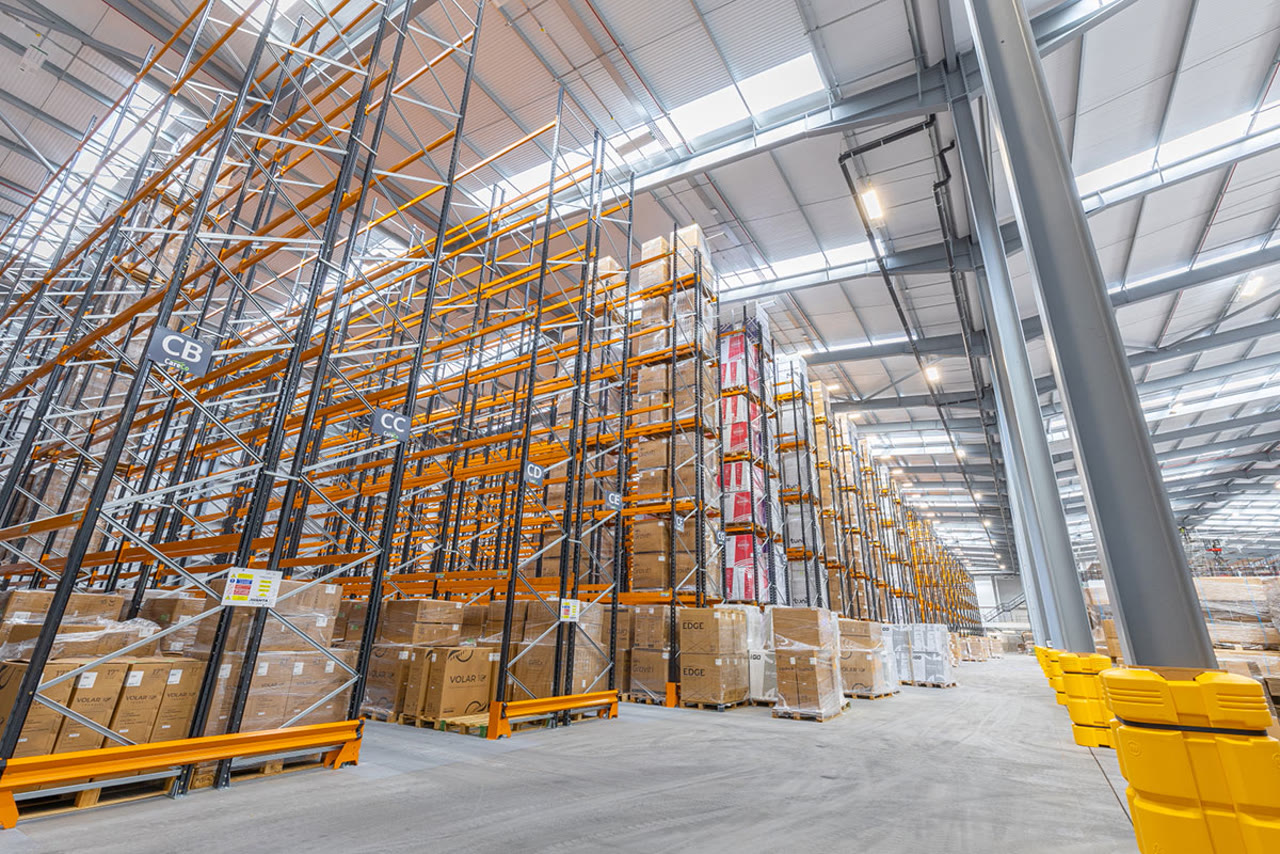
In July 2025, Amazon crossed the threshold of one million robots deployed across its warehouses, a fleet now nearly matching its human workforce (around 1.5 million employees). Over ten years, productivity rose from roughly 175 to nearly 3,870 packages processed per employee per year, a strong signal for the entire logistics industry, including French SMEs that have neither Amazon's budget nor its volumes.
Amazon warehouse robots: the symbolic million milestone
On July 1, 2025, Amazon announced it had deployed its millionth mobile robot across its distribution centers worldwide (source: TechCrunch). Few logistics companies today operate a robotic fleet of this size, and none communicate about it as transparently.
What stands out most is the size ratio between this robotic fleet and the group's human workforce: around 1.5 million employees worldwide, a figure of the same order of magnitude as the number of robots (source: GeekWire). Amazon has also trained 700,000 employees in robotics since 2019, a figure showing that the rollout came, at least in part, with an effort to upskill staff rather than a simple mechanical replacement of jobs.
Behind this round number, several families of robots coexist, each with a specific role.
- Hercules, Pegasus, Proteus: load transport. Proteus is presented as Amazon's first fully autonomous mobile robot (AMR), able to navigate without reserved zones.
- Sequoia: AI-driven storage system.
- Sparrow: single-item picking, a task long considered too delicate for a robotic arm.
- Robin and Cardinal: package sorting.
- Vulcan: a robotic arm with a "sense of touch," designed to reduce musculoskeletal disorders (MSDs) linked to repeated load handling.
- Digit: a humanoid robot, still in testing at Amazon (source: GeekWire).
This diversity illustrates a point often overlooked in public debate: "Amazon's robots" are not a single all-purpose machine but an ecosystem of specialized robots, each designed for one specific repetitive task.
DeepFleet, the AI that steers the fleet
The launch of the millionth robot came with a quieter but equally significant announcement: DeepFleet, a generative AI model designed to optimize the movements of the entire robotic fleet (source: TechCrunch). Its measured effect: a 10% reduction in robot travel time.
A 10% gain in travel time may seem modest in isolation. But at the scale of a million robots making thousands of trips per day, the cumulative effect on overall operational flow becomes substantial. This kind of scale gain is what explains why major logistics players are investing in fleet-management AI, beyond hardware alone.
From 175 to 3,870 packages per employee: the productivity explosion
This is arguably the most staggering statistic in the whole Amazon story: over ten years, productivity measured in packages processed per employee per year is said to have risen from roughly 175 to nearly 3,870 (source: GeekWire) — a more than twentyfold increase.
This shift should not be read as proof that each employee works twenty times faster. It mainly reflects a reorganization of flows: travel tasks, previously done on foot or by forklift, are now handled by robots, freeing up human time for higher value-added tasks — fine-grained picking, quality control, exception handling.
It's this same mechanism, on a very different scale, that explains why an autonomous pallet truck lets a French SME reorganize its internal flows without necessarily increasing its handling headcount.
What this means for the industry: robotisation becomes a de facto standard
The Amazon case extends well beyond its own fleet: it acts as a market signal. When the world's most closely watched logistics player invests heavily and publicly documents its gains, it legitimizes mobile robotisation in the eyes of the entire sector, including much smaller businesses.
This trend shows up in the global market figures too. The global mobile robot market (AGVs and AMRs combined) grew from around $5 billion in 2024 to a projected $14 billion by 2030, a growth rate of +19% per year, compared to just +2.4% per year for traditional fixed automation (source: Interact Analysis, January 9, 2026). Within this market, the share held by AGVs (older, wire-guided robots) is falling from 33% to 20%, in favor of AMRs (more flexible, autonomous robots) — a technology shift affecting every segment, from conveyors to pallet trucks.
An even more telling sign for Easy to Carry: autonomous forklifts and pallet trucks account for only 14% of mobile robot units sold, yet are expected to make up 33% of the sector's global revenue by 2030 (source: Interact Analysis). This is the market's most profitable segment, exactly where the robot is positioned.
Amazon is therefore not an isolated case: it is the most visible part of an underlying trend that is already affecting, on a more modest scale, the entire logistics industry, including mid-sized warehouses.
Amazon warehouse robots: what French SMEs can take from this
The first reaction to Amazon's numbers is often discouragement: "we have neither that budget nor those volumes." That's true, and it's also a point worth nuancing. What made mobile robotics inaccessible to SMEs just a few years ago wasn't only the cost of the hardware, but above all the cost of the associated infrastructure: rails, conveyors, dedicated zones, civil engineering work.
Today's generation of AMRs, which the robot is part of, changes this equation. These autonomous pallet trucks rely on sensors and SLAM navigation that let them move through an existing aisle, amid pedestrian traffic and conventional forklifts, with no floor markings or dedicated infrastructure. The model was in fact announced by the manufacturer on August 18, 2026.
In concrete terms, what the Amazon trend signals for French SMEs comes down to three points.
- The trend is moving down-market. What was once reserved for e-commerce giants is becoming accessible through packaged solutions, with either a classic purchase model or rental (RaaS, Robotics as a Service), which avoids a heavy upfront investment.
- The most achievable gains are the ones Amazon documented first: automating repetitive trips (dock-to-storage, line-side replenishment), not replacing an entire job.
- The price range remains wide and depends on actual needs: the autonomous pallet truck market generally sits between €30,000 and €150,000, a gap that justifies comparing several quotes before committing.
The message isn't "do what Amazon does" — an SME has neither the same volumes nor the same constraints. It's that the technology which let Amazon robotize its trips at scale is now available on a much smaller scale, without the infrastructure work that used to limit access to it.
Putting this in perspective with the French market
Where does France stand relative to this global trend? Its industrial robot density is 195 robots per 10,000 industrial employees, placing the country 18th worldwide, above the global average (132) but far behind Germany (449, a gap of a factor of 2.3) (source: IFR, World Robotics 2025).
| Indicator | Figure | Source |
|---|---|---|
| Robots deployed by Amazon (July 2025) | 1,000,000 | TechCrunch |
| Amazon human workforce (order of magnitude) | ~1.5 million employees | GeekWire |
| Packages/employee/year productivity, 10-year change | ~175 → ~3,870 | GeekWire |
| Travel-time savings from DeepFleet | -10% | TechCrunch |
| Employees trained in robotics since 2019 | 700,000 | GeekWire |
| Global mobile robot market, 2024 → 2030 | $5B → $14B (+19%/year) | Interact Analysis |
| France robot density | 195 robots / 10,000 employees, 18th worldwide | IFR, World Robotics 2025 |
France does, however, have an asset worth highlighting: Exotec, regarded as France's first industrial unicorn, produced its 4,000th Skypod robot and opened a new headquarters near Lille in February 2026 (sources: Exotec; Maddyness). The country isn't starting from zero, but the gap with Germany and South Korea (1,220 robots per 10,000 employees, ranked 1st worldwide) shows there is still significant room for improvement for French companies, SMEs included.
The jobs debate: what the numbers really say
No article on Amazon and robotics can skip the jobs question, given how much it fuels public debate. Internal documents cited by the New York Times in October 2025 suggest Amazon is looking to avoid up to 600,000 hires by 2033 through automation (source: Entrepreneur.com, citing the New York Times); another estimate puts the figure at 500,000 (source: eMarketer).
Both figures deserve methodological caution: they come from leaked internal documents, not an official Amazon statement, and they project avoided hires over the long term, not current job cuts. Amazon, for its part, highlights the 700,000 employees trained in robotics since 2019, presenting robotisation as support for its teams rather than outright replacement.
The reality is probably somewhere between these two narratives: robots are absorbing a growing share of repetitive trips (as confirmed by the productivity figures), while still requiring employees for supervision, maintenance and exception handling. This is a debate that remains open, and one that extends well beyond the Amazon case alone.
FAQ
How many robots does Amazon use in its warehouses in 2026?
Amazon crossed the threshold of one million robots deployed across its distribution centers on July 1, 2025 (source: TechCrunch). This robotic fleet is now of a comparable order of magnitude to the group's human workforce, around 1.5 million employees worldwide (source: GeekWire).
What is DeepFleet, Amazon's AI for its robots?
DeepFleet is a generative AI model launched by Amazon in July 2025 to optimize the movements of its mobile robot fleet. Its measured effect is a 10% reduction in robot travel time, a gain that adds up at scale across millions of daily trips (source: TechCrunch).
Will Amazon replace all its employees with robots?
Nothing suggests that. Internal documents point to up to 600,000 avoided hires by 2033 (New York Times, via Entrepreneur.com), but Amazon has also trained 700,000 employees in robotics since 2019. Both figures coexist: robots are taking over repetitive trips, not the full range of human jobs.
Can a French SME draw inspiration from Amazon's model?
Yes, on its own scale. What made mobile robotics inaccessible to SMEs, the cost of infrastructure (rails, conveyors), disappears with the latest generation of AMRs, deployable with no construction work. The most achievable gains remain the ones Amazon documents first: automating repetitive trips, not an entire job.
Related reading
- autonomous pallet truck: full overview of the autonomous pallet truck
- Autonomous pallet truck: the most profitable segment of mobile robots
- Robot density: France ranks 18th worldwide
- Will Amazon cut 600,000 jobs? Robots and employment, the facts
- Humanoid robots in the warehouse: where do things really stand?
Automating your warehouse with Easy to Carry
You don't need a million robots to benefit from the same principle as Amazon: freeing up human time by automating repetitive trips. The autonomous pallet truck applies this same logic on the scale of an SME, with no infrastructure work. Request your free site pre-assessment to find out what's really automatable in your warehouse.
Let's assess your aisles before everyone else does
Distribution opens soon in France. In the meantime, four questions are enough: your regional contact sends back a written verdict on your site, with no price and no date.