
Price of an autonomous pallet truck in 2026: real ranges, hidden costs and ROI
August 18, 2026 · 8 min read
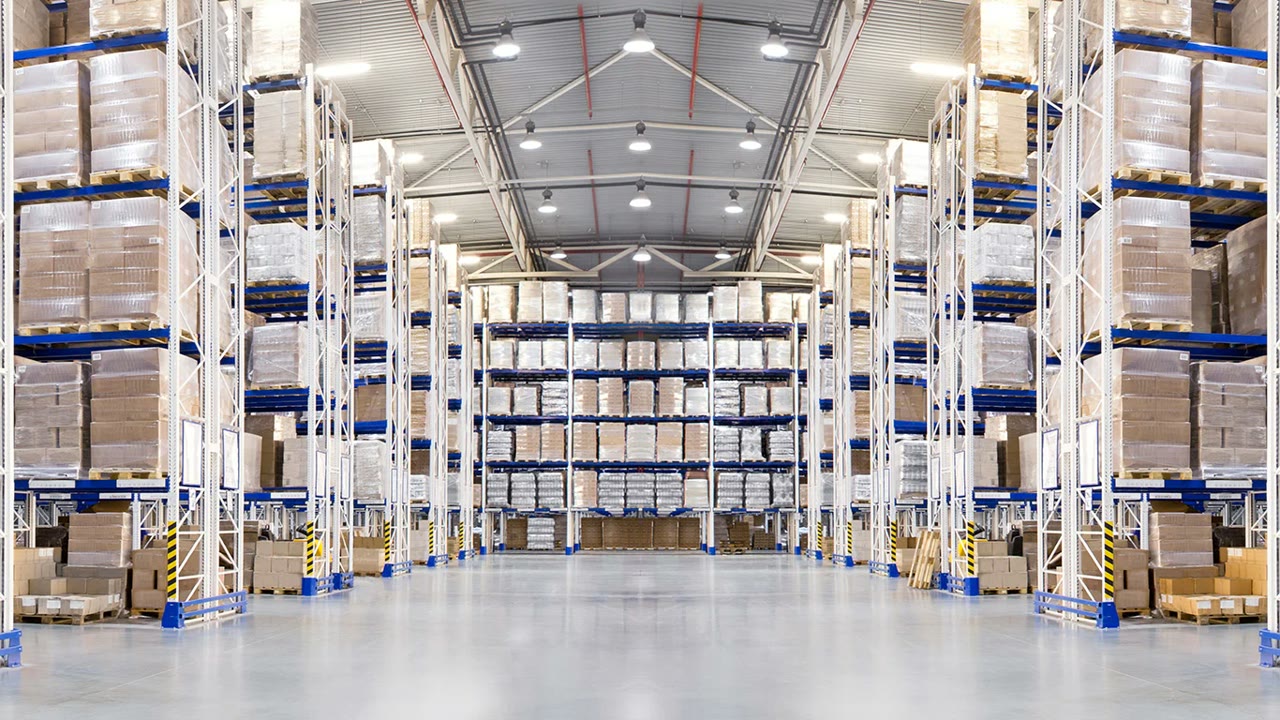
In 2026, an autonomous pallet truck costs between €30,000 and €150,000 excl. VAT to buy, excluding integration. Entry-level models such as the EP EXP15 break that floor down to around €12,000 excl. VAT, while a high-end AMR like the MiR1200 Pallet Jack runs to roughly $65,000. Here are all the observed price ranges, the hidden costs to budget for, and the right way to calculate the payback.
Price of an autonomous pallet truck: the direct answer
If you searched for "autonomous pallet truck price", you've probably noticed that almost no manufacturer publishes a rate card. The reason is simple: these machines are sold on a project basis, with an integration share that varies from one site to another. The market ranges do exist, though.
For an AGV (automated guided vehicle), expect €30,000 to €150,000 excluding integration; for an AMR (autonomous mobile robot, with no guidance infrastructure), the observed range runs from €50,000 to €150,000 (specialist intralogistics sources, 2026). Two public reference points help bracket the market.
- EP Equipment EXP15 (1,500 kg): around €12,000 excl. VAT, with leasing advertised from €1,000/month, the price disruptor of the segment, designed for simplified commissioning with no technician.
- MiR1200 Pallet Jack (1,200 kg): around $65,000 excluding integration (price observed at a North American distributor), the high-end AMR benchmark with AI-based pallet detection.
Between these two boundaries, the automated ranges from major forklift manufacturers (Fenwick-Linde T-MATIC, Jungheinrich ERE 225a, STILL AXL 15 iGo, Toyota Autopilot) and pure players (Balyo, Agilox) are sold exclusively on a project quote. The market remains an expert one: in France, AGV sales are counted in hundreds of machines a year, on the order of 500 to 600 units according to Toyota Material Handling France (source: Voxlog report), but global momentum is strong, with more than 4 million mobile robots expected in service by the end of 2027 (source: Interact Analysis).
2026 price table: from the manual pallet truck to the autonomous pallet truck
To place the price of an autonomous pallet truck within the wider handling-equipment market, here are the ranges observed in France in 2026, in euros excl. VAT.
| Segment | New price (excl. VAT) | Reference points |
|---|---|---|
| Manual pallet truck, 2,000-2,500 kg | €210 to €700 | Used: €100-300; rental from €40/day |
| Semi-electric pallet truck, 1,500 kg | €1,100 to €1,800 | Powered lift, manual traction |
| Walk-behind electric pallet truck (entry-level lithium) | €990 to €2,600 | AntOn PTL 1.5 at €990; rental €76-150/day |
| Premium walk-behind electric pallet truck | €6,470 to €8,615 | Jungheinrich EJE 114 to EJE 120i |
| Entry-level autonomous pallet truck | ~€12,000 | EP EXP15 (1,500 kg), leasing from €1,000/month |
| Autonomous AMR/AGV pallet truck, core market | €30,000 to €150,000 (excluding integration) | MiR1200 Pallet Jack: ~$65,000 |
| Automated ranges from forklift manufacturers | On project quote | T-MATIC (3,000 kg), ERE 225a (2,500 kg), AXL 15 iGo (1,500 kg) |
| the robot (2,000 kg, no infrastructure) | On request | Distributed in France by Easy to Carry |
Quick read: there is a factor of 100 between a manual pallet truck and an autonomous pallet truck. But comparing the machines against each other is misleading: the right basis for comparison is the full cost of the operator who pushes the pallet truck, which we come back to below.
What makes the price of an autonomous pallet truck vary
Within the same category, the price of an autonomous pallet truck can vary from single to triple. Four factors explain most of the gap.
Capacity and lift functions
A 1,200 kg horizontal-transport robot (MiR1200, OTTO Lifter) is not in the same league as a 2,000 kg pallet truck like the robot, nor a 3,000 kg automated truck like the Fenwick T-MATIC. And as soon as you move from simple pallet transport to high-level stacking (autonomous stackers and reach trucks), the mechanics and sensors move up a notch, and so does the price.
Navigation technology
Legacy AGVs navigate by laser with reflectors fixed to the walls: the machine can be cheaper, but the infrastructure and layout study add to the bill. Latest-generation AMRs (SLAM, 3D LiDAR, cameras with AI-based pallet detection) do away with infrastructure altogether: deployment is faster and total cost is often more predictable, even if the unit price of the machine can be higher.
Fleet size
An average French project involves 3 to 4 machines, but fleets of 30 to 40 units are becoming more common (source: Voxlog report). The unit price falls with volume, while the software line item (supervision, traffic management) grows in importance.
Software and integration
Fleet management, interfacing with your WMS or ERP, multi-brand interoperability (the VDA 5050 standard): depending on the offer, these building blocks are included, sold as an annual licence, or billed as an integration service. This is often where the biggest gaps between two quotes hide.
The hidden costs to include in your budget
The machine price is only part of the equation. Four line items should appear in your forecast budget.
Integration. The €30,000 to €150,000 ranges are quoted excluding integration: flow study, site mapping, mission configuration, testing and commissioning come on top of the machine price. Recent "no-infrastructure" models, deployable without construction work, cut this item significantly, and some manufacturers even claim commissioning with no technician needed.
Maintenance. Annual service contract, wear parts, batteries: forklift manufacturers have historically built their profitability on services, and automation is no exception. Ask for a maintenance-contract quote covering the full depreciation period, not just the purchase price.
Regulatory inspections. Depending on the configuration, high-lift equipment may fall under lifting equipment subject to a periodic general inspection (VGP) every six months (decree of 1 March 2004). A standard-lift pallet truck is not subject to it, but check the exact status of your equipment with your inspection body.
Training and safety. The reference standard for driverless trucks is EN ISO 3691-4. The employer must train and inform staff who operate the robot or work nearby, and formalise traffic rules. This training and change-management time should be budgeted for.
Purchase, leasing or RaaS: three ways to finance it
Three financing models coexist in the autonomous-pallet-truck market.
| Model | Principle | Who it suits |
|---|---|---|
| Purchase (CAPEX) | One-off investment, book depreciation over 3 to 5 years | Stable flows, long-term outlook, available cash |
| Leasing / long-term rental | Monthly rent, machine financed by a third party, observed from €1,000/month for entry-level models | Smoothing cash flow, testing before rolling out |
| RaaS (Robotics-as-a-Service) | All-inclusive subscription: hardware, software, maintenance, updates | Turning CAPEX into OPEX, flexible commitment |
Leasing is already the dominant model among French handling-equipment renters, and it transfers naturally to mobile robots. RaaS, pushed by some American players, remains an emerging model in France: few structured offers exist to date, but the formula appeals to SMEs that want to avoid the upfront investment.
Grants and subsidies active in 2026
Beware of outdated information still circulating online: the 40% robotics super-depreciation scheme (article 39 decies B of the French tax code), reserved for assets acquired in 2019-2020, has ended. Do not include it in your financing plan.
A genuinely real lever does exist, however: Assurance Maladie / Carsat prevention grants, including the fund for preventing occupational wear (FIPU) dedicated to ergonomic risks. These schemes can fund up to 70% of the amount excl. VAT of handling equipment that reduces musculoskeletal disorders, with caps ranging from roughly €1,000 to €75,000 depending on the scheme and regional fund.
Typical conditions: eligible headcount (some grants target businesses with 1 to 49 employees), an up-to-date risk assessment document (DUERP), and an application filed via net-entreprises.fr. As terms vary by fund and by year, check with your Carsat before signing the purchase order.
Note: the France 2030 plan funds the French robotics supply side (Bpifrance calls for projects), not the end user's purchase directly.
Robot price vs. forklift-operator cost: the real ROI calculation
An autonomous pallet truck should not be compared to an €8,000 electric pallet truck, but to the full workstation it automates. In France, a forklift operator earns €26,000 to €41,000 gross per year depending on experience, i.e. a fully loaded employer cost of roughly €35,000 to €55,000 per year (2025 compensation studies).
In other words: a core-range AMR represents one to three years of the fully loaded cost of a single position. On 2-shift flows, where the same route requires two consecutive positions, the equation accelerates accordingly. Market feedback points to a ROI of 18 to 36 months for AGV/AMR projects, with productivity gains of +50% to +200% on the flows concerned and an error rate cut by a factor of 3 to 5 (specialist intralogistics sources).
Two factors reinforce the calculation further in 2026. First, the labour shortage: around 15,000 forklift-operator positions are vacant in France, and 40% of logistics companies say a staff shortage is holding back their growth. Second, incident rates: MSDs account for more than 80% of recognised occupational diseases, more than 11 million working days lost per year, and a recognised occupational disease costs an average of €44,000 (source: INRS), costs that weigh directly on your workplace-accident insurance contribution.
The purchase price is therefore not the right question. The right question is: how much does the pallet flow you haven't automated yet cost you every year?
FAQ
What is the price of an autonomous pallet truck in 2026?
Expect €30,000 to €150,000 excl. VAT excluding integration for an AGV or AMR-type autonomous pallet truck. Entry-level options start around €12,000 excl. VAT (EP EXP15), and a high-end AMR like the MiR1200 Pallet Jack runs to roughly $65,000. Most manufacturers only sell on a project-by-project quote.
How much does a palletising AMR robot cost?
Palletising AMRs range from €50,000 to €150,000 excluding integration. Price varies with capacity (1,200 to 3,000 kg), navigation technology, fleet size and supervision software. Integration, maintenance and training come on top of the machine price and should be budgeted for.
Is it better to buy, lease or move to RaaS?
Buying suits stable flows with a long-term outlook: depreciation over 3 to 5 years. Leasing smooths out cash flow, with rental plans seen from €1,000/month for entry-level models. RaaS, an all-inclusive subscription covering hardware, software and maintenance, turns the investment into an operating cost but remains an emerging model in France.
What is the ROI of a handling robot?
Market feedback points to a return on investment of 18 to 36 months for AGV/AMR projects. The calculation should be weighed against the fully loaded employer cost of a forklift operator, €35,000 to €55,000 per year, multiplied by the number of shifts covered, adding the costs avoided in MSDs and staff turnover.
Do you need a CACES certificate to use an autonomous pallet truck?
CACES R489 covers ride-on handling trucks. For a driverless robot, the reference is the EN ISO 3691-4 standard, backed by training and an authorisation issued by the employer to staff who operate the machine or work nearby. Have your setup validated by your Carsat or the INRS.
Related reading
- Price of an electric pallet truck in 2026: the complete guide
- Autonomous pallet truck vs. forklift operator: the full TCO comparison
- How to calculate the ROI of a pallet-truck robot
- Autonomous pallet truck: the complete 2026 guide
- AGV vs. AMR: what are the differences for your warehouse?
Ready to move from price to quote? Easy to Carry distributes the robot in France, a fully autonomous 2,000 kg pallet truck with infrastructure-free navigation, deployable with no construction work. Since its France price is not public, the simplest approach is to start from your own case: request the free site pre-assessment, with a written verdict within 48 business hours.
Let's assess your aisles before everyone else does
Distribution opens soon in France. In the meantime, four questions are enough: your regional contact sends back a written verdict on your site, with no price and no date.