
Forklift Operator Shortage: 5 Concrete Solutions for French Warehouses
August 18, 2026 · 8 min read
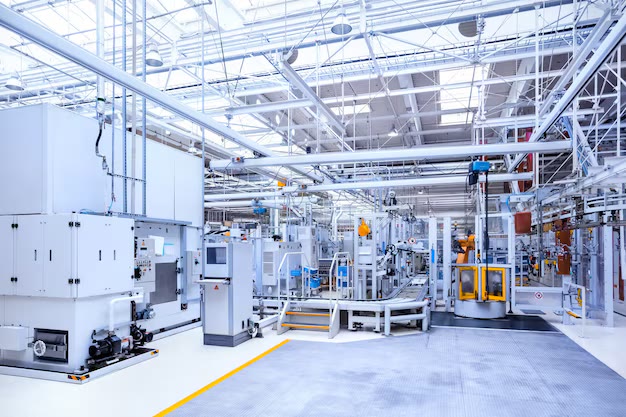
France has around 15,000 vacant forklift operator positions in 2026, out of some 350,000 forklift operators currently in work (Focusur, 2026). Facing this shortage, five levers have proven effective: raising pay, training in-house, reducing physical strain, retaining teams and robotising non-value-added trips. Here is how to activate them, with indicative timelines and budgets.
The forklift operator shortage: the numbers
About 15,000 forklift operator positions are vacant in 2026, and 40% of logistics companies say the shortage of qualified staff is holding back their growth (Focusur, 2026). Sector-wide, 88,000 positions were unfilled in Q2 2024 (Amalo), and the 2025 BMO survey rates 50.1% of hires as difficult to fill (France Travail).
The paradox is real: with around 1.8 million employees, logistics is France's fifth-largest employer (Crit). Yet candidates are scarce, especially in tight labour markets, Hauts-de-France, Île-de-France, Grand Est, the Rhône valley, where temp pay for CACES 1/3/5 forklift operators climbs to €1,800-2,400 gross (Focusur, 2026).
Four compounding causes
- Physical strain. Musculoskeletal disorders (MSDs) account for more than 80% of recognised occupational diseases, with transport and logistics among the hardest-hit sectors; lower-back pain is the leading cause of unfitness for work before age 45 (source: INRS).
- Shift patterns. Two-shift and three-shift rotations and night work, officially recognised strain factors that open rights to the C2P personal prevention account (INRS), put off a share of candidates.
- The job's image. The role is seen as purely physical when it has become technical (sophisticated equipment, WMS, safety): this image deficit dries up the pipeline of candidates.
- A stretched talent pool. Temp work, historically the entry point into the trade, accounts for around 14% of the sector's workforce (Crit), and temporary transport-logistics employment fell in 2024 (Voxlog).
The result is a vicious circle: understaffing increases physical strain, fuels absenteeism and turnover, and makes recruiting forklift operators even harder.
Solution 1: raise pay and working conditions
The first move, and the fastest to activate: position yourself correctly on the local pay market. Benchmarks observed in France (Staffmatch).
| Forklift operator profile (CACES R489) | Observed gross monthly pay |
|---|---|
| Entry-level | €1,802-1,950 |
| 3 to 5 years' experience | €1,950-2,300 |
| Experienced / senior | €2,300-2,600 and above |
| Uplifts | Île-de-France: +10 to +20%; night-shift premium: up to +35% |
Two takeaways. In tight labour markets, temp work already pays €1,800 to €2,400 gross (Focusur, 2026): a permanent offer below that level starts at a disadvantage. And sector gaps exist, pharma and aerospace pay better than mass retail (Staffmatch).
Pay is not everything: recent equipment, schedules communicated in advance, decent facilities and clear bonuses matter to a forklift operator who can compare several offers.
Solution 2: train in-house (CACES, AFPA, funding)
When the market can no longer supply forklift operators, you have to create them, training is short and can be funded.
CACES R489: 3 to 5 days per employee
CACES R489 (ride-on trucks) takes 3 to 5 days to prepare, costing €700 to €1,100 excl. VAT for initial training and €450 to €750 for refresher training, valid for 5 years (caces.fr); the "CACES 1 3 5" bundle is training providers' classic entry-level offer. The pipeline is active: 860,244 CACES certificates issued in 2023 (Global Certification).
A useful reminder: it is the driving authorisation issued by the employer that is legally required (Article R4323-56), with CACES serving as the proof method recommended by CNAM and INRS. Training a motivated order picker or warehouse clerk is therefore the shortest path to a new forklift operator.
Career change: the AFPA professional certificate
To recruit from outside the trade, the AFPA Warehouse Forklift Operator professional certificate trains in about 3 months (420 hours) for €4,620, with CACES R489 categories 3 and 5 equivalence for 5 years, and 68.4% of graduates in employment after 6 months (AFPA).
Funding sources to tap
Three channels: your OPCO (skills development plan), the employee's CPF personal training account (CACES is eligible, with an out-of-pocket cost of around €100) and France Travail's AIF individual training grant for a jobseeker you recruit (caces.fr). The real cost can therefore be far below the list price.
Solution 3: reduce physical strain to widen the talent pool
Physical strain is both a cause of the shortage and a lever for solving it: a warehouse that goes easy on people's bodies attracts and retains staff.
The regulatory framework pushes in this direction: the French Labour Code makes mechanisation the rule and manual carrying the exception (Articles R4541-3 and R4541-5), and the NF X35-109 ergonomic standard sets the "acceptable" load at 15 kg, far below the 55 kg the law tolerates under conditions. Manual handling accounts for around 48 to 53% of workplace accidents resulting in at least 4 days off work (Assurance Maladie, 2023).
In practice, three areas of action.
- Mechanise remaining handling tasks: an entry-level lithium electric pallet truck starts at €990 excl. VAT, with an accompanying electric stacker running €2,000 to €9,000 (Hellopro). Modest investments that remove the most damaging manual lifts.
- Work on workstation ergonomics: pick-up and set-down heights, task rotation, physical-load analysis, INRS provides tools for this approach (ED 6161 method).
- Tap available grants: prevention subsidies from Assurance Maladie and Carsat (including the FIPU ergonomic-risk fund) finance up to 70% of equipment that reduces MSDs, with caps of roughly €1,000 to €75,000 depending on the scheme, an up-to-date DUERP risk assessment required, and applications filed via net-entreprises.fr. The 40% robotics super-depreciation scheme, meanwhile, has ended.
The financial stakes are real: a workplace accident costs an average of €4,800 in direct costs, or €19,000 to €29,000 including indirect costs (Inforisque), and a lower-back occupational disease represents about a year off work and €44,000 (INRS), not counting the resulting increase in the employer's accident-insurance contribution rate.
Solution 4: retain staff through career paths and versatility
Recruiting is expensive; retaining costs less. Four practices stand out among employers who successfully retain their forklift operators.
- Map out career paths. A forklift operator can aim for a logistics team leader role: €2,200 to €2,700 gross starting out, €3,500 to €4,500 with experience (ICI Formation). Making that path visible from day one changes everything.
- Develop versatility. Multi-CACES (1, 3, 5), order picking, receiving, stocktaking: versatility enriches the role and makes scheduling more resilient. It also builds the future skills identified by the AFT around robots: flow mapping, WMS integration, maintenance, change management.
- Pay attention to onboarding young workers and temps. Under-25s with less than a year's seniority carry a higher accident risk (Assurance Maladie, 2023); mentoring and a gradual ramp-up reduce both accidents and early departures.
- Recognise the work. Regular check-ins, achievable bonuses, listening on scheduling: basic HR practices that make the difference in a market where forklift operators have the choice.
Solution 5: robotise non-value-added trips
A final lever, complementary to the first four: hand robots the tasks for which you can no longer find anyone.
A large share of a forklift operator's time goes into repetitive shuttle runs: dock to storage, line-side supply, returning empty pallets. Autonomous pallet trucks (AMRs) can absorb these trips with no human added value: deployment with no rail or construction work, night and weekend operation, the shifts hardest to staff, while your forklift operators focus on stacking, loading and quality control.
This is reinforcement, not replacement: France Travail points out that robotisation "assists" rather than replaces, creating supervision and maintenance roles; the AFT speaks of "collaborative solutions." While 41% of employers worldwide plan to cut headcount through automation, around 50% redeploy their teams instead (WEF 2025, cited by Amalo), and automation remains "a clear minority" in French warehouses (Amalo). With 15,000 vacant positions, the robot fills a gap more than it pushes anyone out.
On budget: €30,000 to €150,000 excluding integration, or leasing observed from around €1,000/month for entry-level models, compared with a forklift operator's annual fully-loaded cost of €35,000 to €55,000, for a robot depreciated over 3 to 5 years (Estimsalaire, Staffmatch). Models such as the robot, the autonomous pallet truck that moves 2 tonnes and deploys with no construction work, embody this generation designed to support understaffed teams.
Which solution for the forklift operator shortage? The summary table
| Solution | Implementation timeline | Indicative cost | Main effect |
|---|---|---|---|
| 1. Raise pay and conditions | Immediate | Market pay scale: €1,802-2,600 gross + bonuses | Attract applications, limit turnover |
| 2. Train in-house for CACES R489 | 3 to 5 days per employee | €700-1,100 excl. VAT (refresher €450-750), OPCO/CPF funding | Create forklift operators from the existing talent pool |
| 2b. AFPA career-change certificate | About 3 months | €4,620, can be funded (CPF, France Travail) | New talent pool; 68.4% in employment after 6 months |
| 3. Reduce physical strain | A few weeks to a few months | Electric pallet truck from €990 excl. VAT, stacker €2,000-9,000; Carsat/FIPU grants up to 70% | Fewer accidents and MSDs, wider talent pool |
| 4. Retain staff (career paths, versatility) | Ongoing | Continuous training, internal promotions | Lower turnover and absenteeism |
| 5. Robotise non-value-added trips | A few weeks (AMR, no construction work) | €30,000-150,000 or leasing from ~€1,000/month | Absorb unfilled positions, cover nights and weekends |
These five solutions combine: a market-aligned pay policy, in-house training, a physical-strain reduction programme, and robots on the flows nobody wants to run any more.
FAQ — Forklift operator shortage
Why is there a shortage of forklift operators in France?
About 15,000 forklift operator positions are vacant in 2026 (Focusur). Four causes compound each other: physical strain (MSDs account for more than 80% of recognised occupational diseases, source INRS), two-shift, three-shift and night-shift schedules, a poor image of the trade, and a stretched temp-labour pool.
What is a forklift operator's salary in 2026?
An entry-level forklift operator earns €1,802 to €1,950 gross per month, an experienced one €1,950 to €2,300, and a senior €2,300 to €2,600 and above (Staffmatch). Add +10 to +20% in Île-de-France and up to +35% for the night-shift premium.
How can I fund CACES training for an employee?
CACES training for R489 costs €700 to €1,100 excl. VAT and lasts 3 to 5 days. Three funding routes exist: the skills development plan via your OPCO, the employee's CPF personal training account (out-of-pocket cost of around €100), and France Travail's AIF grant for a jobseeker you recruit.
Can a pallet-truck robot replace a forklift operator?
It reinforces more than it replaces: France Travail points out that robotisation "assists" teams, creating supervision and maintenance roles. The AMR absorbs repetitive trips and unfilled night shifts; the forklift operator refocuses on stacking, loading and quality control.
Related reading
- Autonomous pallet truck vs forklift operator: the full cost comparison (TCO)
- Do you need a CACES certificate for an electric or autonomous pallet truck?
- Autonomous pallet truck: the complete 2026 guide
- Automating a warehouse with no conveyors or construction work: a how-to
- ROI of a pallet-truck robot: the complete calculation method
- Forklift operator turnover and absenteeism: what they really cost the warehouse, the cost breakdown that these solutions reduce.
Reinforce your teams with Easy to Carry
If your flows are suffering from unfilled positions, the robot, a 2-tonne autonomous pallet truck deployable with no construction work, can absorb repetitive trips to reinforce your forklift operators. Request the free site pre-assessment: we study your use case based on your answers, with a written verdict within 48 business hours.
Let's assess your aisles before everyone else does
Distribution opens soon in France. In the meantime, four questions are enough: your regional contact sends back a written verdict on your site, with no price and no date.