
Cold-storage warehouse robot: can an AMR really work at -25°C?
August 18, 2026 · 7 min read
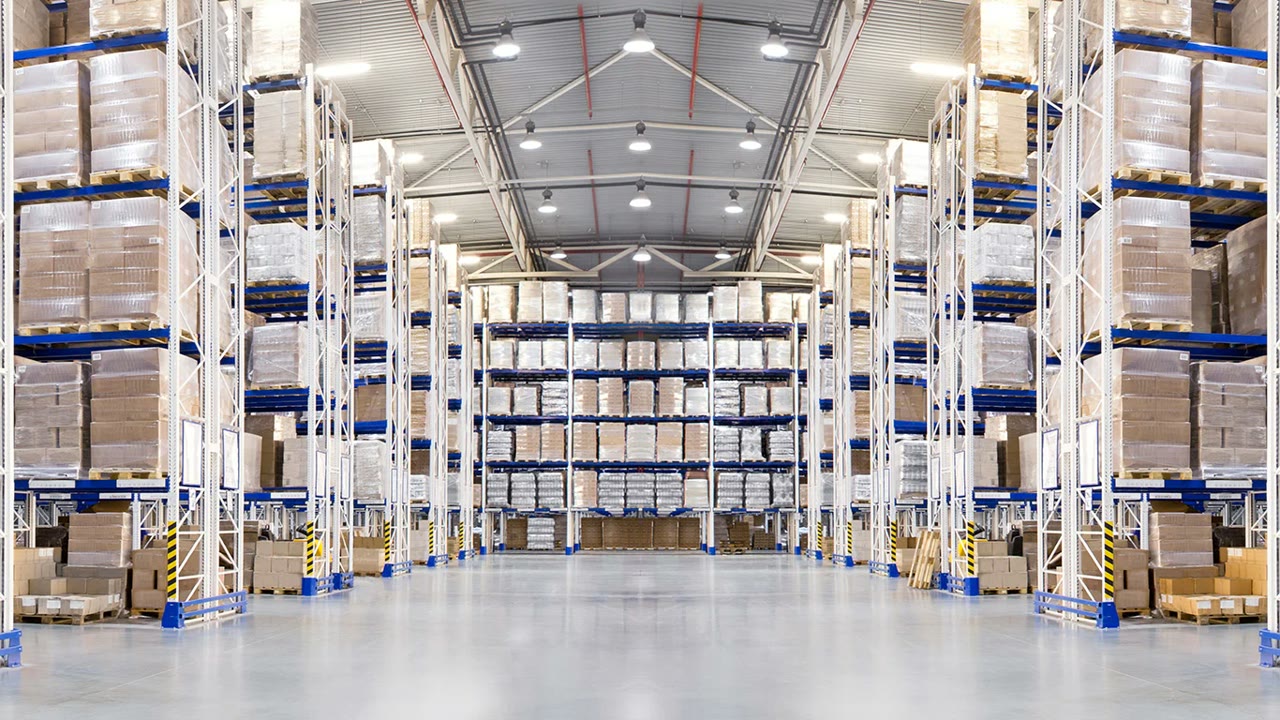
A cold-storage warehouse robot is not something you improvise: condensation on exit from a cold room, lithium batteries losing capacity, lubricants that stiffen, and LiDAR sensors sensitive to frost all call for dedicated hardware design, not a simple software setting. A handful of players, such as French manufacturer iFollow, publicly document compatibility down to -25°C; most AMRs on the market are still designed for ambient or positive-cold conditions. This guide details the technical constraints and the real specialists in sub-zero cold.
Cold-storage warehouse robot: why extreme cold isn't a software option
A cold-storage warehouse robot has to withstand violent, repeated temperature swings, moving from a tempered zone to -18°C or -25°C several times an hour, without any degradation in its navigation, its grip or its runtime. This is not a matter of configuration: it's a mechanical, electronic and thermal design choice that has to be built into the specifications from the outset.
The cold-storage sector accounts for around 8% of French warehousing revenue, with 39.4% growth between 2017 and 2024 and close to 700 facilities recorded (source: Arthur Loyd). It's a growing market, but one where energy already accounts for 30 to 40% of operating costs, and electricity alone represents 41.6% of the cost of a cold-storage service (source: Made in FR, February 2025). Automating it makes obvious sense, provided the robot actually survives the cold.
The 4 technical challenges a cold-storage warehouse robot must overcome
A cold-storage warehouse robot faces physical constraints that an ambient warehouse never sees. Here are the four main ones, the ones that separate a "sub-zero" datasheet from a standard one.
1. Condensation on exit from the cold room
Every trip from a -20°C zone into a tempered zone generates condensation on all of the robot's cold surfaces, then, on return to the negative-temperature room, frost. This moisture is a primary threat to electrical connectors and circuit boards: a cold-storage warehouse robot therefore needs a reinforced ingress-protection (IP) rating and thermally insulated electronic enclosures, or failures will accumulate cycle after cycle.
2. Lithium batteries and the drop in cold-weather capacity
Lithium batteries, standard on almost all AMRs, lose usable capacity and charging speed at low temperatures: this is a known electrochemical phenomenon, not a manufacturing defect. A cold-storage warehouse robot designed for sub-zero use includes active battery thermal management (heating, pack insulation) to preserve usable runtime in real-world use, or mission times and charging times degrade sharply.
3. LiDAR sensors and optics exposed to frost
An AMR's navigation relies on LiDAR sensors and depth cameras that must see clearly at all times. Frost and condensation on the optics directly distort the robot's perception of its environment, a safety risk as much as a navigation-reliability one. A cold-storage warehouse robot therefore needs treated or heated optics, along with multi-sensor fusion algorithms able to tolerate a momentary degradation of one sensor without losing track of the mission.
4. Lubricants and materials that stiffen or become brittle
Below 0°C, standard lubricants thicken and slow down moving mechanisms (forks, wheels, cylinders), while some plastics become brittle on impact. A robot built for extreme cold uses certified low-temperature lubricants and materials whose mechanical resistance has been validated in sub-zero conditions, a point few product sheets detail publicly.
Which players specifically address extreme cold?
Few manufacturers publicly document sub-zero compatibility for their mobile robots. Two distinct profiles stand out on the French market.
iFollow, a French company, advertises AMRs operating down to -25°C, for loads ranging from 300 kg to 1.2 tonnes (source: ifollow.fr). It is currently one of the few players to publish such a precise temperature range for an autonomous mobile robot, making it a reference for any cold-storage warehouse robot project in France.
Alstef (formerly BA Systèmes) positions itself as a French leader in heavy automation, stacker cranes, conveyors, for sub-zero cold, with well-known food-industry references: Candia, Yoplait, Bonduelle, Charal, Heineken, Nestlé Purina (source: alstefgroup.com). These are, however, large fixed installations, not flexible mobile robots comparable to an AMR.
Outside these documented cases, the vast majority of AMRs on the market are rated for an operating range close to 0 to +40°C: designed for ambient and positive-cold conditions, not for frozen storage.
Standard robot vs. cold-storage warehouse robot: what changes in the specs
| Criterion | Standard AMR (ambient) | Cold-storage warehouse robot (designed for -18/-25°C) |
|---|---|---|
| Temperature range | Roughly 0 to +40°C | Documented down to -25°C (e.g. iFollow) |
| Battery management | Standard, no dedicated heating | Active thermal management of the lithium pack |
| Ingress protection (IP) | Standard level | Reinforced rating against condensation/frost |
| Sensors (LiDAR, cameras) | Non cold-treated optics | Heated or anti-frost-treated optics |
| Lubricants and materials | Standard | Low-temperature, validated for sub-zero cold |
| Manufacturer documentation | Cold range rarely specified | Cold range explicitly stated |
This table sums up the key point: without an explicit mention of a sub-zero range in the manufacturer's technical datasheet, a robot should be considered unsuited to frozen storage, even if it performs perfectly in an ambient warehouse.
The robot and the cold: what's documented, what isn't
The robot is a 2,000 kg autonomous pallet truck, launched on August 18, 2026, whose official product sheet details load capacity, LiDAR-SLAM and VSLAM navigation, battery runtime (12 hours unloaded, 6 hours at full load) and charging times, but makes no mention of any operating temperature range. No public statement from the manufacturer confirms, to date, compatibility with sub-zero cold.
In practical terms: it is possible neither to confirm nor to rule out that the autonomous pallet truck operates at -25°C. This information simply isn't public today. Any project in a negative-temperature cold room should therefore be treated as unconfirmed until written compatibility has been validated with Easy to Carry Robotics.
On the other hand, a significant share of the flows in a cold-storage warehouse take place in positive cold (0/+4°C, fresh produce) or in tempered zones, docks, preparation areas, entry airlocks. In these zones, the robot can be considered much as it would be in a standard warehouse, subject to a site assessment. For any negative-temperature zone, the recommended approach remains to require written confirmation of compatibility before any commitment.
FAQ
Can a handling robot operate at -25°C?
Yes, but only if it was designed for it. French manufacturer iFollow documents AMRs operating down to -25°C, for loads of 300 kg to 1.2 tonnes. Most standard AMRs, by contrast, are rated for 0 to +40°C. Always check the manufacturer's technical datasheet before any frozen-storage project, without assuming undocumented compatibility.
Does the robot work in a negative-temperature cold-storage warehouse?
Its temperature range is not publicly documented to date: the official product sheet does not specify it. It should therefore neither be claimed nor ruled out that it operates in sub-zero cold. For any negative-temperature cold room, written confirmation from Easy to Carry and the manufacturer is essential before any commitment.
What are the main technical challenges for a robot in extreme cold?
Four challenges dominate: condensation and frost on sensors and connectors, the drop in lithium battery capacity in the cold, LiDAR optics/cameras exposed to frost, and lubricants or plastics that stiffen or become brittle below 0°C. Each requires dedicated hardware design, not a simple setting adjustment.
Which players offer robots suited to extreme cold in France?
iFollow documents AMRs down to -25°C for 300 kg to 1.2 tonnes. Alstef (formerly BA Systèmes) is a French leader in heavy automation for sub-zero cold, with well-known food-industry clients (Candia, Bonduelle, Heineken). For other robots, including the robot, sub-zero compatibility still needs to be checked directly with the manufacturer.
How do I check whether a robot is compatible with my cold-storage warehouse?
Require the operating temperature range in the manufacturer's official technical documentation, not in a sales pitch. If it isn't published, ask for written confirmation before any commitment. Also map out your zones (ambient, positive cold, negative cold): robotic feasibility differs for each one.
Related reading
- Cold-storage warehouse automation: guide and solutions, the full sector overview, including strain reduction and benefits.
- Autonomous pallet truck: a complete overview of the autonomous pallet truck, every documented feature, including the areas of uncertainty.
- Food-industry logistics: automating without compromising traceability, cold chain and HACCP in practice.
- AGV vs AMR: the differences, understanding both robot families before choosing a sub-zero solution.
- ROI of a pallet-truck robot: the calculation method, factoring the energy cost of cold into your profitability calculation.
A cold-storage warehouse robot project? Before any commitment, get written confirmation of the thermal compatibility of the equipment you're considering: the robot's temperature range is not publicly documented to date, but a deployment in an ambient or positive-cold zone can already be studied. Discover the autonomous pallet truck or contact Easy to Carry to have your site assessed, temperature zone by temperature zone.
Let's assess your aisles before everyone else does
Distribution opens soon in France. In the meantime, four questions are enough: your regional contact sends back a written verdict on your site, with no price and no date.