
Mandatory handling aids: what does Article R4541-3 of the French Labour Code require?
August 18, 2026 · 7 min read
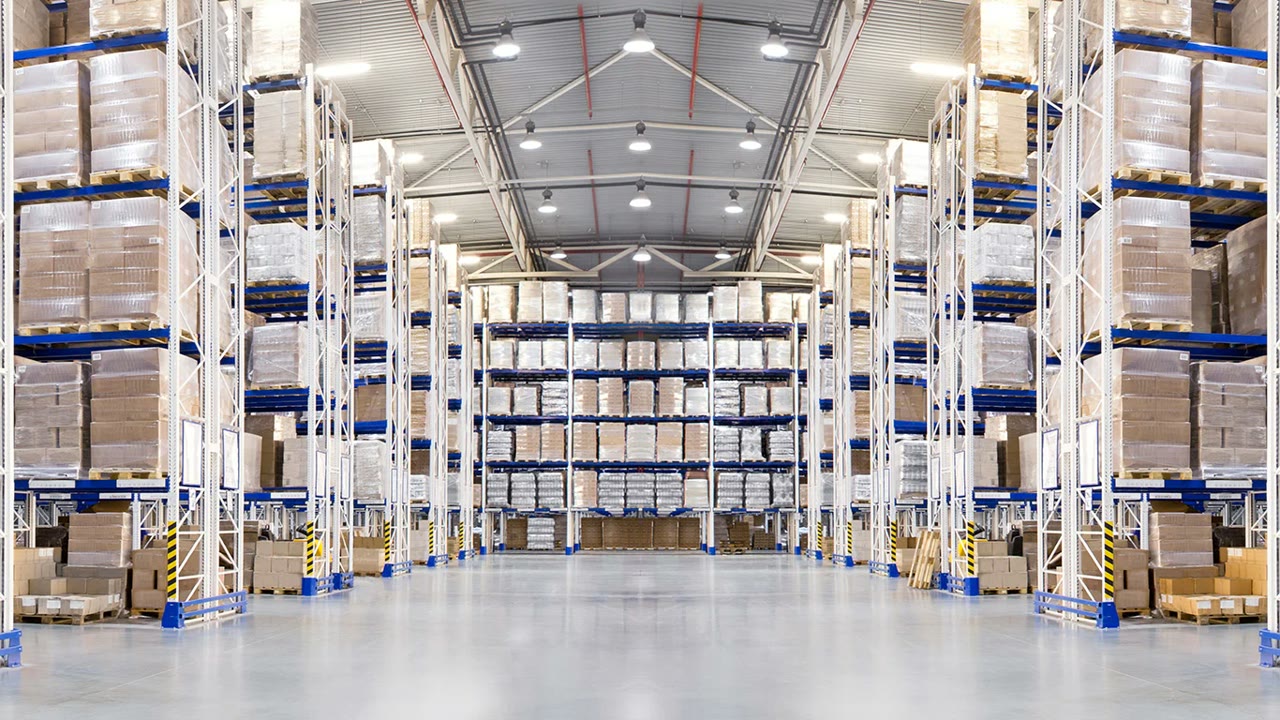
Yes: as soon as it is technically possible, a mandatory handling aid becomes a requirement for the employer. Article R4541-3 of the French Labour Code sets out a simple principle—avoid manual handling whenever a mechanical means can replace it. Carrying loads by hand is only an exception, tolerated solely when no technical solution is reasonably available (R4541-3 and R4541-5).
Mandatory handling aids: the principle set out by Article R4541-3
Many logistics managers wrongly believe that the French Labour Code merely sets weight ceilings not to be exceeded (the well-known 55 kg or 105 kg limits of Article R4541-9). In reality, those ceilings are only the residual safety net. The primary requirement lies upstream: the employer must first seek to eliminate manual handling itself, not merely regulate it.
That is precisely the point of Article R4541-3, which reverses the usual logic. It is not up to the employee to adapt to the load, by learning the right movements or getting occasional help from a colleague. It is up to the employer to organize the work so that the load no longer needs to be carried by hand, as far as possible. Mechanization thus becomes the default rule, and manual handling the exception that must be justified.
This hierarchy has a direct consequence for any company that handles pallets, boxes or parcels on a daily basis: the absence of a handling aid is not a neutral choice. It is a potential breach as soon as a technical solution existed and was not implemented.
R4541-3 and R4541-5: what exactly do the texts say?
The wording of Article R4541-3 leaves no ambiguity about the hierarchy of measures to be taken. The employer must assess, if possible as early as the design of workstations, the risks that manual handling poses to the workers concerned. It must then take appropriate organizational measures or provide suitable means, particularly mechanical ones, in order to avoid workers having to manually handle loads.
Article R4541-5 complements this framework: when manual handling cannot be avoided despite these measures, the employer must then reduce the risk by organizing workstations, limiting or offsetting the physical effort involved, and giving employees the means to handle loads safely. In other words, manual handling is never the default solution: it is a regulated fallback, which presupposes that it has already been demonstrated that no mechanization was possible.
Both articles are part of the decree of September 3, 1992, which transposed European obligations on preventing risks linked to manual handling into French law. Their scope goes well beyond weight ceilings: they create a genuine obligation of means, and, in practice, a near-obligation of results whenever mechanization technology exists and is accessible.
What this means in practice in a warehouse or stockroom
For an operations manager, this legal requirement translates into very concrete questions to ask at every workstation. Does an operator move full pallets by hand or with a hand truck? Does an order picker carry boxes over several meters when a cart or a conveyor could make the trip instead? Does a stockroom worker carry loads up a floor with no lift or assistance?
In each of these cases, the regulatory answer is not, in the first instance, "train the employee in the right movements"—even though such training remains useful and recommended. The answer the texts expect is first: does equipment exist that eliminates or drastically reduces manual handling on this task? If so, Article R4541-3 pushes toward installing it.
This logic applies just as much to a large logistics warehouse as to a small store stockroom or a food-distribution platform. Company size changes nothing about the principle: only the proportionality of the means deployed (organizational measures or equipment investment) may vary depending on context and resources.
Examples of handling aids: from the pallet truck to the autonomous robot
Handling aids cover a wide range of solutions, from the simplest to the most automated. Here are the most common families found in warehouses and stockrooms.
- The manual pallet truck: the first step of mechanization, it eliminates direct carrying of the load but still leaves the pushing and pulling effort to the employee.
- The electric pallet truck: greatly reduces physical effort thanks to motorized traction, while still being driven by an operator.
- The forklift or stacker: allows heavy loads to be lifted, stacked and moved at height, with training and often a suitable CACES certificate.
- The hand truck, pallet lifter or lift table: low-cost, occasional aids, suited to small operations or store stockrooms.
- The conveyor: relevant for repetitive flows on a fixed route, it eliminates all manual carrying along the line.
- The autonomous pallet truck (AMR): the latest generation of mechanization, it moves the pallet without any operator having to push, pull or even continuously drive it.
This last category clearly illustrates how far the logic of Article R4541-3 can go: instead of simply equipping an operator with a tool they still have to operate, a robot like the robot handles the pallet's movement from start to finish, up to 2,000 kg, with no physical exertion from staff. This is mechanization that goes beyond simple assistance: it eliminates the carrying task itself rather than merely lightening it.
Mandatory handling aids: when is the employer at fault?
The employer is at fault as soon as it has implemented neither an organizational measure nor a mechanical means, while a reasonable technical solution existed to avoid manual handling. This failure can show up on the ground in several ways, and it is worth knowing how to spot them before an accident or an inspection reveals them.
A first warning sign is a total absence of analysis: if the company's risk assessment document (DUERP) does not list manual handling as an identified risk for the relevant workstations, that is already a breach of the prior-assessment obligation set out by R4541-3. A second warning sign is the repeated presence of manual carrying on high-volume, high-frequency tasks, with no mechanical solution ever having been studied or budgeted, even at a minimal level.
A third, more insidious warning sign is partial equipping: a warehouse that has pallet trucks but where operators still carry loads by hand on certain routes, for lack of enough equipment or out of habit. The law does not demand technological perfection, but it does demand that the effort to avoid manual carrying be real, documented and proportionate to the company's means, not merely something claimed on paper.
In the event of a workplace accident linked to load-carrying that could have been mechanized, this absence of measures can weigh heavily in establishing employer fault, on top of the human risk posed by the musculoskeletal disorders and back pain linked to manual handling.
Summary table of R4541-3/5 obligations
| Obligation | Reference text | What the employer must do |
|---|---|---|
| Assess the manual-handling risk | R4541-3 | Identify the workstations concerned, if possible as early as workstation design |
| Avoid manual handling whenever possible | R4541-3 | Put a mandatory handling aid in place: an organizational measure or a mechanical means |
| Reduce the risk when manual handling cannot be avoided | R4541-5 | Organize the workstation, limit/offset the effort, train staff in proper movements and posture |
| Update the risk assessment document | French Labour Code (DUERP) | Record the analysis and measures taken, updated at least yearly if ≥ 11 employees |
| Do not exceed manual-handling weight ceilings | R4541-9 | 105 kg absolute ceiling, 55 kg with medical fitness clearance, 25 kg for women |
FAQ
What counts as a handling aid under the French Labour Code?
It is any organizational measure or mechanical equipment that avoids or reduces manual handling of a load: a pallet truck, cart, hand truck, conveyor, lift table or autonomous robot. Article R4541-3 requires the employer to favor these solutions whenever a technical option exists, before considering manual handling as a last, regulated resort.
Is manual handling of loads completely banned in companies?
No, it is not banned, but it becomes the exception: Article R4541-3 requires it to be avoided whenever a mechanical means makes that possible. When manual handling still remains despite this, Article R4541-5 then regulates it by requiring the workstation to be organized and risk-reduction measures put in place, within the weight limits set by R4541-9.
What does an employer risk by installing no handling aid at all?
The employer is exposed to a breach of its general duty of prevention, which can be flagged during a labor-inspection audit or trigger liability in the event of a workplace accident or musculoskeletal disorder. The absence of measures to avoid manual handling, when a technical solution existed, can weigh heavily in establishing fault.
Are there financial aids for equipping a site with handling aids?
Yes, co-financing schemes exist, notably via the regional Carsat bodies and the FIPU fund, which can cover part of the investment depending on conditions and sector, up to 70% in some cases. The 40% robotics super-depreciation tax scheme that previously existed, however, is no longer active in 2026.
Related reading
- What is the maximum weight an employee can carry? (R4541-9 explained), the legal ceiling that complements the mechanization obligation covered here.
- Automating a warehouse with no conveyors or construction work: how to mechanize quickly without redesigning the whole building.
- ROI of a pallet-truck robot: calculating the return on investment of an automated handling aid.
- Store stockrooms: automating handling with lifts and shared docks, the same logic applied to small spaces.
- Autonomous pallet truck: the complete 2026 guide, understanding the family of robots that pushes mechanization the furthest.
- Preventing musculoskeletal disorders in logistics: obligations and Carsat grants 2026, financing a handling aid.
Do you need to secure your R4541-3 compliance while gaining productivity? The robot, a 2,000 kg autonomous pallet truck distributed in France by Easy to Carry, moves your pallets with no physical exertion from staff—a form of mechanization that directly answers the spirit of the text. Discover the autonomous pallet truck or request the free pre-assessment of your site to identify where to install it as a priority in your warehouse or stockroom.
Let's assess your aisles before everyone else does
Distribution opens soon in France. In the meantime, four questions are enough: your regional contact sends back a written verdict on your site, with no price and no date.