Robotic cleaning easy to clean easy to carry Robotic material handling
SITE ASSESSMENT

Can your site host it? Four conditions decide.

The robot moves through your aisles as they are, subject to four conditions: a threshold, a gap, a slope, an aisle width. The free pre-assessment reviews them based on your answers, and its written verdict tells you which to check with a tape measure.

THE FOUR MEASUREMENTS

A threshold, a gap, a slope, an aisle

Most sites work with no construction needed. Still, it has to be checked, measurement by measurement, on the routes the robot will actually use. When a value exceeds the limit, a simple solution usually exists: we propose it in the pre-assessment's written verdict.

10 mm The threshold
35 mm The gap
3° loaded The slope
2 m The aisle

Why it matters: the robot crosses a level change up to 10 mm. Beyond that, an expansion joint, a doorway or a poorly seated plate stops the mission or jolts the load.

How we measure it: we walk each planned route and record every threshold with a tape measure, including ones your teams no longer notice.

If the limit is exceeded: a light ramp placed on either side of the threshold solves most cases, with no construction work.

Why it matters: the wheels cross a gap up to 35 mm—a drainage channel, a grate or a recessed rail. Wider, and it risks catching the wheel.

How we measure it: we survey grates, channels and door rails along the route, in both directions of travel.

If the limit is exceeded: a cover plate placed over the crossed section is usually enough, or the route goes around the obstacle.

Why it matters: loaded with 2,000 kg, the autonomous pallet truck climbs up to 3°, about 5%. Empty, it climbs up to 8°. A ramp that's too steep rules out a loaded route, without ruling out the project.

How we measure it: with an inclinometer, on every ramp, dock and camber along the loaded route.

If the limit is exceeded: we propose an alternative route, sometimes longer but passable, or reserve the ramp for empty runs.

Why it matters: the robot picks up a pallet at 90° in a 2 m aisle. It self-corrects an offset pallet up to 15 cm or one rotated up to 15°, but aisle width remains the condition for the maneuver.

How we measure it: we record the actual usable width, between posts, racking and drop-off zones, not the theoretical figure on a floor plan.

If width is lacking: shifting the pickup a few slots, reorienting pallets, or reversing a traffic direction is often enough.

BASED ON YOUR ANSWERS

Why the pre-assessment comes before the demonstration

FULL SCALE

The robot will run on your floors, not ours

The pre-assessment is based on your own answers, and the first wave of demonstrations will come, once distribution opens, to check its verdict against reality: the robot will move through your aisles, cross your thresholds, engage a pallet in 20 s. If a point on the route poses a difficulty, you will see it at the same time we do, and we will look for a solution together. The full process of a mission is described on our How it works page.

PERCEPTION

The robot will map your site as it moves

The autonomous pallet truck navigates by 3D LiDAR and cameras (dual SLAM): as it moves, it builds a precise map of your site, which will check the pre-assessment's verdict against the ground and serve as the basis for deployment. Our page dedicated to the robot describes this technology in detail.

BEYOND THE FOUR MEASUREMENTS

What else the pre-assessment reviews

Your pallets, not ideal pallets

Three-runner pallets, perimeter base, non-standard supports: describe your actual formats in the pre-assessment, and the verdict tells you if they can be engaged. The first wave of demonstrations will test them loaded, as in production. Two fork widths (620 mm or 550 mm depending on the version) cover common cases.

Spacing between pallets

A 15 cm gap between two pallets is enough for the autonomous pallet truck to engage a pallet without touching its neighbor. The verdict tells you what to measure in your densest ground-storage zones.

Your teams' movement

Pedestrian crossings, equipment, manual pallet trucks: the pre-assessment accounts for these based on what you tell us, and the traffic plan will define at deployment where the robot goes, where it slows, and where an operator takes over.

Charging points

A well-placed 200-240 V outlet is enough: charging takes about 2 h. The verdict helps you identify a location that fits your work cycle, accounting for battery life—12 h empty and 6 h fully loaded.

TRANSPARENCY

What the assessment cannot promise

Every assessment has its limits. Here are ours, stated before the pre-assessment rather than after.

Productivity is measured, not decreed

The number of pallets moved depends on your distances, your flows and your hours. 6 hours of battery life at full load does not mean 6 hours of continuous work at 2,000 kg either. That is precisely what the demonstration will measure, once distribution opens: real pallets, on your real routes.

"No site modification" does not mean "no integration"

The robot navigates with no fixed installation, but a deployment is prepared: triggering missions by app, buttons or programming interface, fleet coordination including offline, and, if needed, optional integrations with your elevators and automatic doors. We discuss these from the pre-assessment onward.

A pallet truck, not a forklift

Its lift is 200 mm: it carries pallets at ground level, from one point to another, and does not raise them into racking. Our brand is young and owes you this clarity: we cite no reference deployment and prefer to show you the robot at your site, during the first wave of demonstrations, once distribution opens.

AFTER THE VERDICT

A regional contact, from measurement to pricing

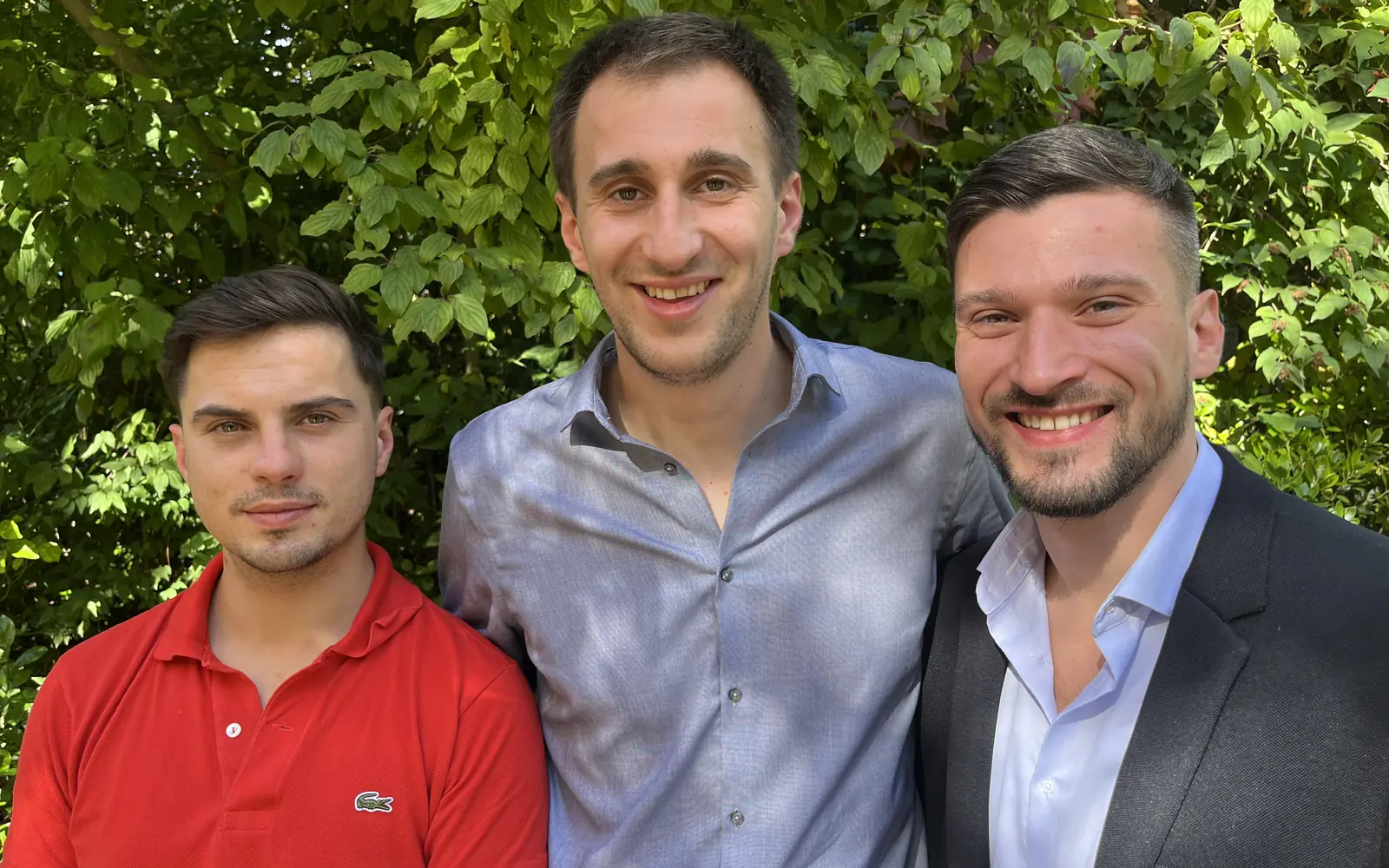
The founding partners of the Easy To group
SUPPORT

The same contact, from pre-assessment to after-sales service

Easy To Carry relies on easytoclean's regional network: 12 regional contacts. The person who reviews your answers is the one who gives you the verdict, then follows your file. After the demonstration, once distribution opens, we price both plans: full service (the robot, maintenance, parts and training in a single all-inclusive monthly fee) and purchase with a maintenance contract, where the robot joins your assets. Our FAQ answers the most common questions.

Near you

A single contact, from pre-assessment to after-sales service

Thirteen people across mainland France; the one in your region follows you from pre-assessment to after-sales service. Click a portrait to write to them.

Hauts-de-France Paul, your Easy to Carry contact in Hauts-de-France Paul
Grand Est Nicolas, your Easy to Carry contact in Grand Est Nicolas
Île-de-France Allan, your Easy to Carry contact in Île-de-France Allan
Normandy Salomé, your Easy to Carry contact in Normandy Salomé
Brittany Jeanne, your Easy to Carry contact in Brittany Jeanne
Pays de la Loire Corentin, your Easy to Carry contact in Pays de la Loire Corentin
Centre-Val de Loire Juliette, your Easy to Carry contact in Centre-Val de Loire Juliette
Bourgogne-Franche-Comté Dorian, your Easy to Carry contact in Bourgogne-Franche-Comté Dorian
Nouvelle-Aquitaine Guillaume, your Easy to Carry contact in Nouvelle-Aquitaine Guillaume
Nouvelle-Aquitaine Léo, your Easy to Carry contact in Nouvelle-Aquitaine Léo
Auvergne-Rhône-Alpes Alexandre, your Easy to Carry contact in Auvergne-Rhône-Alpes Alexandre
Occitanie Pierre-Aimé, your Easy to Carry contact in Occitanie Pierre-Aimé
Provence-Alpes-Côte d'Azur Gautier, your Easy to Carry contact in Provence-Alpes-Côte d'Azur Gautier

See all our service areas →

The usual pattern
  1. A salesperson sells the machine
  2. A project manager organizes delivery
  3. A vendor takes over after-sales service
  4. A technician discovers your site on the day it breaks down

Four contacts, and the last one knows neither your floors, your hours, nor what was agreed at the start.

At Easy to Carry
A single contact From the first meeting to routine maintenance
They measure your spaces and price the project They install the robot and map your areas They train your teams They come back for upkeep and adjustments

The person who works on your machine is the one who saw your site before deployment. Nothing to re-explain.

  • 12 regionsAll of mainland France except Corsica: we are established in every region.
  • 72 hThe contractual deadline for replacing a machine down due to a breakdown.

Your pallets move on their own? Your floors can be cleaned autonomously too. By the same group: over 700 sites supported across France, with the same regional contact.

Discover easy to clean ↗

The pre-assessment is the site assessment

Four questions, a written verdict within 48 business hours from your regional contact, free of charge: request yours. The demonstration will follow once distribution opens.